



A bra is one of the most worn and least understood items in a wardrobe. Choosing the right one means knowing your size, the different styles and what each is made for, and getting the fit right makes a real difference to comfort, support and how your clothes look.
This guide brings everything about women’s bras into one place: history and statistics, the main types of bras, how to calculate your bra size, size charts, how to check the fit, breast shapes, fabrics, features, care and the most common questions.
Read it from start to finish, or use the contents below to jump straight to the part you need.
Table of contents
- A short history
- Statistics
- Anatomy of a bra
- Types of bras
- Sports bras
- What to wear with sport bra
- How to measure your bra size
- Size chart
- How to know a bra fits
- Breast shapes and the bra styles that suit them
- Materials and fabrics
- Features and benefits
- Which bra is best for you?
- Fun facts
- How to care for bras
- FAQs
A short history of the bra
The modern bra was patented on 3 November 1914, but women had been supporting their breasts with bands, wraps and corsets for centuries. Women in ancient Greece and Rome wore garments to support the bust, and for hundreds of years Western fashion relied on stiff corsets stiffened with whalebone and later metal.
Breast support goes back to the ancient world, but the modern bra took shape in the early 1900s. In 1913 a nineteen-year-old New York socialite, Mary Phelps Jacob, tied two silk handkerchiefs together with ribbon so a corset would not show under her evening gown. She patented the “Backless Brassiere” on 3 November 1914 and later sold the rights for $1,500. Metal shortages in the First World War ended the corset’s grip, cup sizes arrived in the 1930s, and the first sports bra, made from two jockstraps, followed in 1977. Today’s bras are built around fit and function, with seamless knits, moisture-wicking fabrics and much wider size ranges.
The core idea has stayed the same for more than a century: a bra should support the breasts and let the person wearing it move freely.
Bra statistics: how many women wear the wrong size?
Most research agrees on one point: a large share of women do not wear the size that fits them best. The exact percentage depends on how “correct” is defined, so treat the figures below as a range, not a single number.
This matters because a bra that does not fit is not just a style problem. A band that is too loose leaves the shoulders carrying weight they are not meant to, cups that are too small squeeze breast tissue, and a bra that is too tight can leave marks and restrict comfortable breathing. Many women have simply never been shown how a well-fitting bra should feel, so** they assume discomfort is normal.**
| Statistic | What it tells us | Source |
|---|---|---|
| 85% of 104 women were wearing ill-fitting bras | Women were poor at choosing their own size, even after tryingseveral bras or using sizing measurements | Australian fit study, 2010 |
| About 1 in 2 women do not know their correct cup size | Women tend to wear the wrong size more often as cup size grows | Study of 163 women, published on PubMed Central |
| 70-80% of women wear incorrectly sized bras | The figure most often quoted in the media, although researchers noteit depends on how fit is judged | Review of earlier studies |
| Tape-measure methods picked the wrong size in three of fourcases | The traditional method overestimated band size in 76% of women andunderestimated cup size in 84% | University of Portsmouth, Ergonomics |
| 1 in 3 women reported breast pain during exercise | Based on women registered for the 2012 London Marathon | British Journal of Sports Medicine, 2013 |
| Up to 73% less breast movement with a sports bra | Compared with wearing no bra while running | University of Portsmouth |
| About 85% of women with exercise-related breast pain improved with awell-fitting supportive bra | Shows how much fit matters in sport | University of Portsmouth |
The pattern across these studies is consistent. Women are more likely to choose the wrong size the larger their cup becomes, most often wearing a band that is too big and a cup that is too small. That combination pushes the straps to do the work the band should be doing, which is why so many women report shoulder pain, digging straps and a bra that rides up.
The sports findings add another layer. Breast tissue has no muscle of its own, so during exercise the bra is the main thing controlling movement. When a quarter of women with a small cup report running-related breast pain, it shows that discomfort in sport is not only a large-bust issue and that support level matters for everyone.








Market size
Industry analysts value the global bra market at roughly US$27-30 billion, depending on the research firm and the year measured. Sports bras are one of the fastest-growing segments, driven by more women taking part in fitness and by demand for size-inclusive ranges. Estimates differ between publishers, so use them as an order of magnitude.
Why the numbers vary
Some studies judge fit by a trained fitter’s criteria, others by comparing a tape-measure size with the bra a woman is actually wearing. Researchers have also pointed out that tape-measure sizing is itself unreliable, which is why a good fit is judged by how the bra sits on the body, not by a number alone (see our fit checklist below).
Anatomy of a bra: what each part does
Knowing the parts makes fitting problems much easier to diagnose. The band does most of the work, which surprises many people.
Every bra, from a simple bralette to a high-support sports bra, is built from the same handful of components. The way these parts are cut, shaped and combined is what separates a bra that feels invisible from one you want to take off the moment you get home.
| Part | What it does | What to look for |
|---|---|---|
| Band (underband) | Provides roughly 80% of the support by anchoring the bra around theribcage | Snug and level all the way round, never riding up the back |
| Cups | Contain and shape breast tissue | No gaping at the top, no spilling over the edge, no wrinkling |
| Underwire | A curved wire that sits under the breast and adds lift andseparation | Sits flat against the ribcage, never on breast tissue |
| Gore (centre panel) | The piece between the cups | Should lie flat against the breastbone |
| Wings (side panels) | Support the sides and smooth the back | Should not cut in or roll |
| Straps | Fine-tune the fit and carry a small share of the weight | Stay put without digging in; adjustable length helps |
| Closure | Hooks at the back or front, or a pull-on design with no closure | Fasten on the loosest hook when new |
| Padding or lining | Adds shape, modesty or extra softness | Even and smooth, with no creasing |
When you try on a bra, check the band first, then the cups, then the wire and gore, and only then adjust the straps. Working in that order avoids the most common mistake, which is tightening the straps to fix a problem that actually starts at the band.
If the band is too loose, the cups cannot sit correctly and the straps end up doing too much work, which is why shoulder pain is often a band problem.
Types of bras: styles, benefits and when to wear them
There are** more than 20 common bra styles**. The tables below group them by purpose so you can see at a glance which type suits which job. Sports bras have their own section further down.
Bra styles exist because bodies, clothes and activities differ. A bra that gives a smooth line under a fitted T-shirt will not necessarily work under halter tops, and the bra you wear to the office is rarely the one you want for a run. Rather than hunting for one perfect style, most women are best served by a small rotation of three or four: an everyday bra, a bra for specific outfits, a sports bra and, if needed, one for a life stage such as pregnancy.
Everyday bras
Everyday bras are the ones you wear most, so comfort comes first. A seamless T-shirt bra is the classic choice for smooth lines under clothes, while a wireless bra or a cotton bra suits people who want softness and freedom of movement. If you can only buy one new bra, make it an everyday style in a skin-tone shade.
| Type | What it is | Best for | Watch out for |
|---|---|---|---|
| T-shirt bra | Smooth, seamless moulded cups with light padding | Everyday wear under fitted tops, no visible lines | Moulded cups can be warm in summer |
| Full coverage bra | Cups that cover the whole breast with higher sides | Larger busts, all-day comfort, a secure feel | Can show above low necklines |
| Wireless bra | Support from the cup, band and fabric instead of an underwire | Comfort, sleep, lounging, anyone who dislikes wires | Less lift for fuller busts unless well structured |
| Seamless bra | Knitted or bonded with no stitched seams | Smooth lines under clothes | Often stretchier, so check the band holds |
| Cotton bra and organic cotton bra | Breathable, soft natural fibre | Sensitive skin, warm weather, daily wear | Less shaping and slower to dry |
| Bralette | Soft, often unlined and wire-free, sometimes with lace | Relaxed comfort, small to medium busts, layering | Limited support for fuller busts |
| Padded bra | Foam or fibre lining for shape and modesty | A smooth outline, light shaping | Bulk and heat |
| Front closure bra and front clasp bra | Fastens at the centre front | Limited shoulder or arm mobility, easy dressing | A clasp can show under thin fabrics |
| Camisole bra and tank top with built-in bra | A top with integrated bra support | Light-support lounge and casual wear | Support is usually modest, so not for large cups |
Shape and cleavage bras
Shape bras change the look of the bust rather than just supporting it. A push-up bra adds lift and fullness, a minimizer bra does the opposite and makes the bust look smaller, and styles like the plunge and balconette are designed around specific necklines. They work best when the cup size is exactly right, since a cup that is too big gaps and one that is too small creates a bulge at the top.
| Type | What it is | Best for | Watch out for |
|---|---|---|---|
| Push-up bra | Padding at the base and sides lifts and brings breasts together | Low necklines, adding fullness and cleavage | Padding in the wrong place causes gaping or bulging |
| Plunge bra | Deep V between the cups with a low centre | Low-cut tops and dresses | Needs a lower gore and good side support |
| Balconette bra (half cup) | Horizontal neckline with straps set wide | Square and wide necklines, natural uplift | Less coverage on top |
| Demi, half cup and quarter cup bra | Cups cover only part of the breast | Low and wide necklines | Breast can slip out if the size is off |
| Minimizer bra | Redistributes breast tissue so the bust looks smaller | Fuller busts, structured shirts and tailoring | Needs the correct cup size to work |
| Bustier and longline bra | Extends below the bust to the waist | Dresses, shape and extra band support | Can ride up when sitting |
Outfit-specific bras
Some outfits need a bra designed around them. A strapless bra, a backless bra and a convertible bra each solve a particular neckline problem, and they work by using the band, a silicone grip or adhesive instead of shoulder straps. Because they have less to hold them in place, the fit matters even more: a strapless that is too loose will slip, and one that is too tight will dig in.
| Type | What it is | Best for | Watch out for |
|---|---|---|---|
| Strapless bra | No shoulder straps; relies on a firm band, often with siliconegrip | Strapless and off-the-shoulder tops | A loose band slips; choose the right size, not just a smallerone |
| Backless bra and low back bra | Low-cut back or adhesive design | Backless dresses and low-back tops | Adhesive options lose grip with sweat and cannot be reusedindefinitely |
| Convertible (multiway) bra | Straps can be crossed, halter-style or removed | One bra for many outfits | Slightly less secure than a dedicated style |
| Halter bra | Straps join behind the neck | Halter necklines | Neck strain with heavier busts |
| Racerback bra | Straps meet in a Y or T shape at the back | Racerback tops, sports and casual wear | Not ideal under wide-strap tops |
| One shoulder bra | A single diagonal strap | Asymmetrical necklines | Less stable for larger busts |
| Clear strap bra | Transparent straps | Sheer and cut-out sleeves | The strap can still be visible in strong light |
| Mesh and see-through bra | Sheer or lightly lined fabric | Fashion and occasion wear | Little coverage, so not for functional support |
| Stick-on bra and silicone bra | Adhesive cups with no band or straps | Backless and strapless outfits | Only suits smaller to medium busts and short wear |
Life-stage and special-purpose bras
Breasts change throughout life, and some stages call for a bra made for them. A training bra gives a comfortable first bra to girls and teens, a maternity bra and a nursing bra adapt to pregnancy and breastfeeding, and a post-surgery bra supports recovery. It is worth refitting regularly during these stages, since size can change within weeks.
| Type | What it is | Best for | Watch out for |
|---|---|---|---|
| Training bra (first bra) | Soft, light-support bra for developing breasts | Girls and teens starting to need a bra | Choose comfort over padding and check growth often |
| Maternity bra and pregnancy bra | Stretch fabric, expandable cups and band | Pregnancy, as the ribcage and bust change | Resize as the bust grows |
| Nursing bra | Cups open for feeding without removing the bra | Breastfeeding | Choose a soft, well-supporting fit that suits changing size |
| Post-surgery bra and compression bra | Firm, medical-style support, often with front closure | Recovery after breast surgery, as advised by a clinician | Follow your surgeon’s guidance on type and timing |
| Posture bra and back support bra | Wider straps and a firm back panel | A gentle reminder to stand tall and some back comfort | It will not correct posture on its own; strength work and ergonomicsmatter more |
| Swim bra and bikini bra | Quick-dry fabrics with built-in support | Swimming and beach wear | Rinse after use and avoid wearing wet |
Tip: if you are shopping online, search by the neckline and the job you need the bra to do. A bra that is right for a V-neck is often wrong for a high crew neck, even in the right size.
Sports bras: support levels, designs and how to choose
A sports bra is built to control breast movement, which happens in three directions at once: up and down, side to side, and forward and back. Research from the University of Portsmouth shows that unsupported breasts move in a figure-of-eight pattern during running, that a sports bra can cut that movement by up to 73%, and that one in three women report breast pain during exercise. Breast tissue has no muscle, so a bra is the main source of support during exercise.
Low, medium and high impact
The right level of support depends on the activity, not only on the size of your bust.
| Support level | Activities | What to look for |
|---|---|---|
| Low support | Yoga, pilates, stretching, walking, barre | Light compression or a comfortable crop style, soft fabric, freedomof movement |
| Medium support | Cycling, gym classes, strength training, hiking, dance | Firmer compression, a wide underband, supportive straps, a racerbackor crossover back |
| High support | Running, HIIT, jumping, tennis, boxing, team sports | A high support sports bra with a firm band, wide adjustable straps,structured or encapsulated cups |
Treat these levels as a minimum. If you’re torn between two, go for the higher level of support. Comfort also decides whether women keep exercising, so a supportive bra is money well spent.
If you do several sports, buy for the most demanding one, or keep a high-support bra for running and a lighter one for yoga. Larger cup sizes usually need more support, and so does anyone who wants to minimise movement for comfort.
Compression, encapsulation or both?
| Design | How it works | Good for |
|---|---|---|
| Compression sports bra | Presses the breasts against the chest to limit movement | Smaller busts, low to medium impact, easy pull-on wear |
| Encapsulation | Separate cups hold each breast individually | Larger busts and high-impact sport |
| Hybrid (combination) | Compression plus defined cups | Most women, wide range of activities |
In practice, two bras in the same size can perform very differently, and trying them on matters more than any label.
Sports bra styles
| Style | Why choose it |
|---|---|
| Racerback sports bra | Pulls the straps together at the back so they stay on the shouldersduring movement |
| Padded sports bra | Smooths the outline and adds modesty; removable pads let youadjust |
| Seamless sports bra | Reduces chafing and shows no lines under leggings and tops |
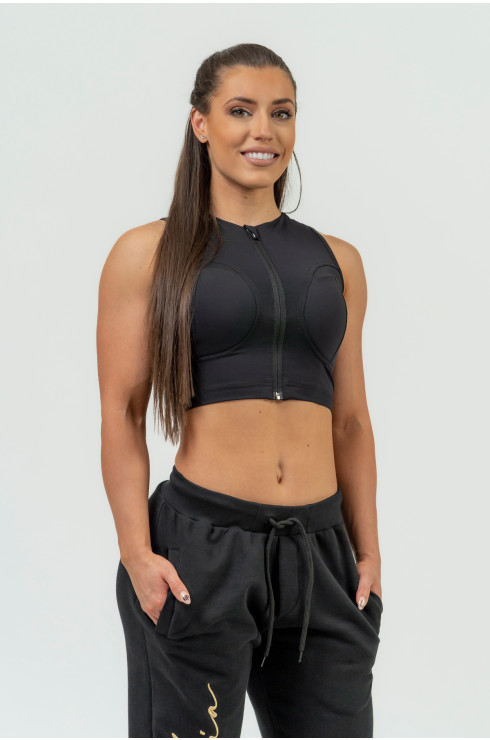
| Front zip sports bra | Easy to put on and take off, which is useful for fuller busts orafter exercise |
| Strappy back sports bra | A style statement; best for low and medium impact |
| High neck sports bra | Extra coverage and support; a good choice for gym and outdoortraining |
| Double layer sports bra | A second layer adds support and opacity |
| Plus size sports bra | Wider band, deeper cups and stronger straps for fuller busts |
| Maternity sports bra | Stretch fabric that adapts as the body changes, for pregnancyworkouts |
| Strapless sports bra | Only for light activity; most strapless designs do not offer enoughsupport for running |
These styles can be mixed with any support level, so a racerback can be low-impact or high-impact depending on how it is built. Look at the band, the cups and the straps rather than the name, because the name on its own does not tell you how much support a bra gives.
Fabrics that work in training
Look for moisture-wicking fabric that moves sweat away from the skin and dries quickly. Polyamide (nylon) and elastane blends give four-way stretch and recovery, while cotton can hold moisture and feel heavy when you sweat. Flat or bonded seams reduce chafing.
How to choose the right sports bra
- Match it to the activity: Choose low, medium or high support for what you do most.
- Get the band right first: It should feel firm and snug, and you should be able to slide two fingers under it, not more.
- Check the cups: No spilling over the top or sides, no gaping, and a smooth shape.
- **Test the straps: **Wide, adjustable straps should not dig in or slip, and the bra should not ride up when you raise your arms.
- Do the jump test: Jump, jog on the spot and twist. If you feel movement or discomfort, try a higher support level or a different size.
- Replace regularly: Many fitters suggest replacing a bra you wear for frequent workouts every 3 to 6 months, because elastic loses recovery over time.
What to wear with your sports bra
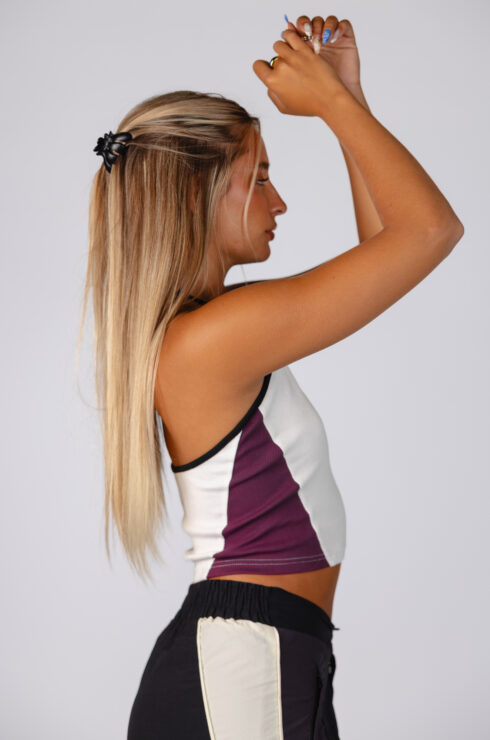
A good sports bra does its best work when the rest of your outfit lets it. The sports clothes you layer over and below it affect comfort, chafing, temperature and how supported you feel, so it helps to think of the whole outfit rather than the bra alone.
Women’s t-shirts
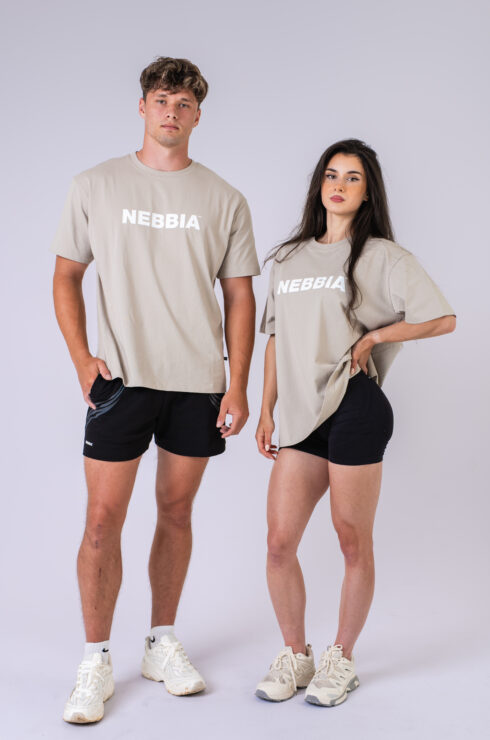
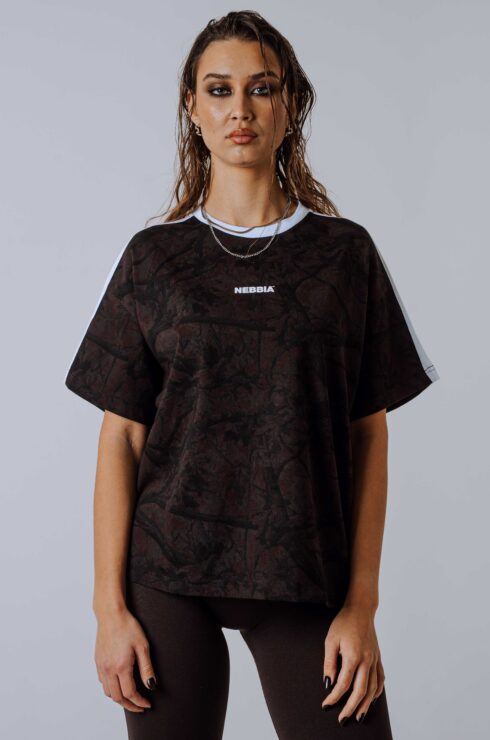
Fitted or relaxed women’s sports t-shirts are the easiest layer over a sports bra, and it works for almost every workout. Look for a moisture-wicking fabric that moves sweat away from the skin, so the bra stays dry underneath. If you like to show the bra, a cropped t-shirt or a loose tank with wide armholes lets a racerback or strappy style peek through, while a regular-length tee gives full coverage for the gym or a run outdoors. Avoid heavy cotton tees for intense sessions, since they hold sweat and can rub against the bra’s edges.
Women’s hoodies
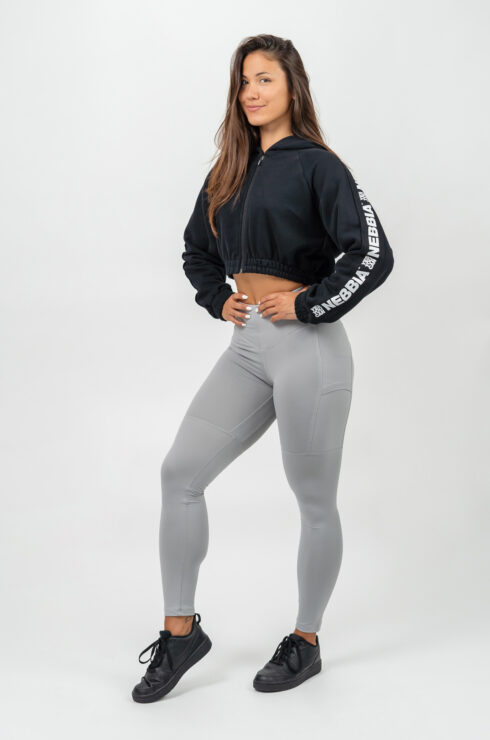
Lightweight women's hoodies or zip-ups are ideal for warming up, cooling down and travelling to and from training, and it layers easily over a sports bra on its own. A front zip is handy because you can open it as you heat up without having to take the whole layer off. Choose a soft, breathable fabric rather than a thick, fleecy one if you plan to keep it on while you move, as thick layers trap heat and make the bra feel tighter. A cropped hoodie keeps the waist clear and sits neatly above high-waisted leggings.
Women’s leggings
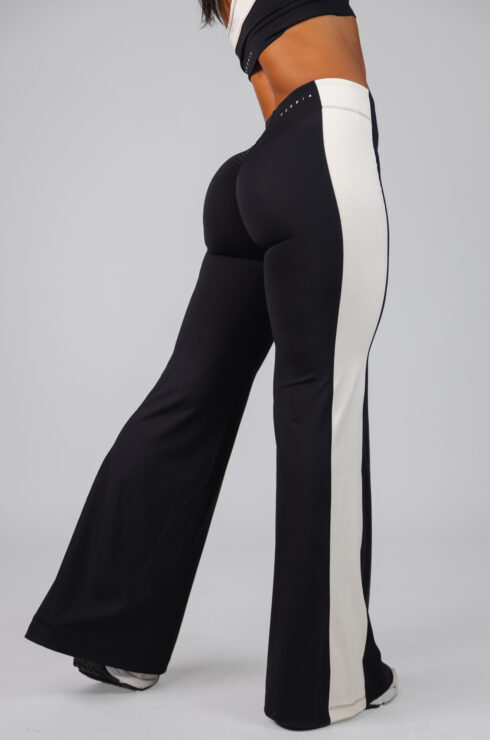
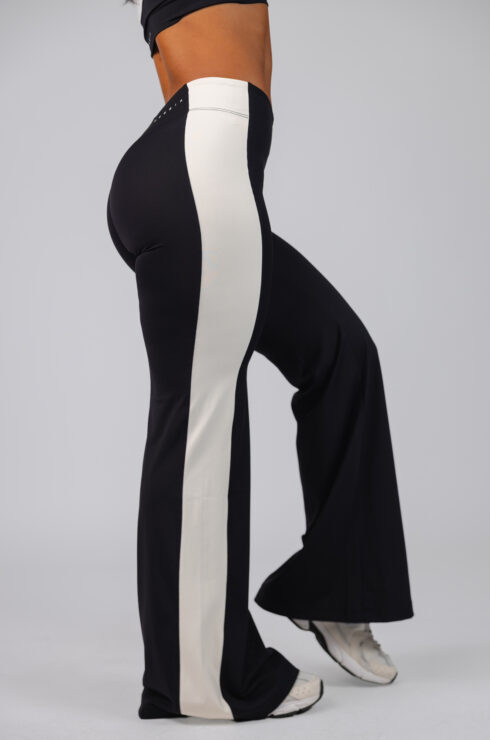
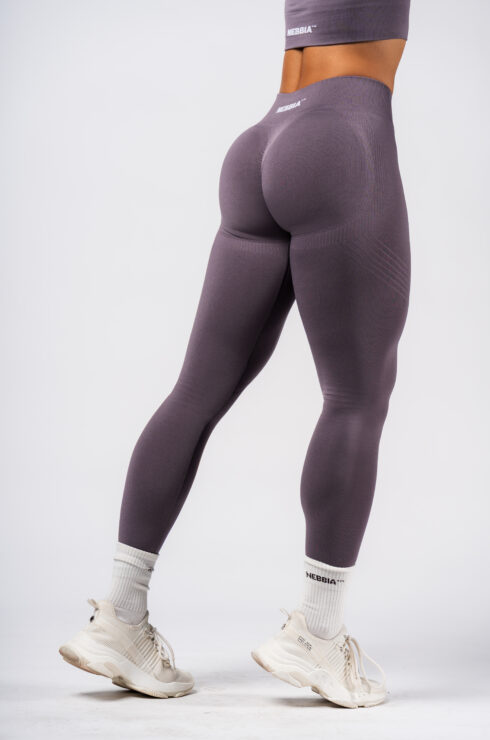
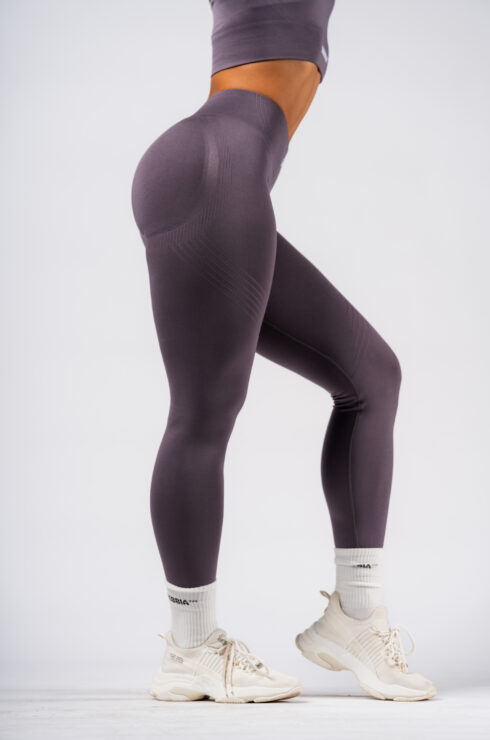
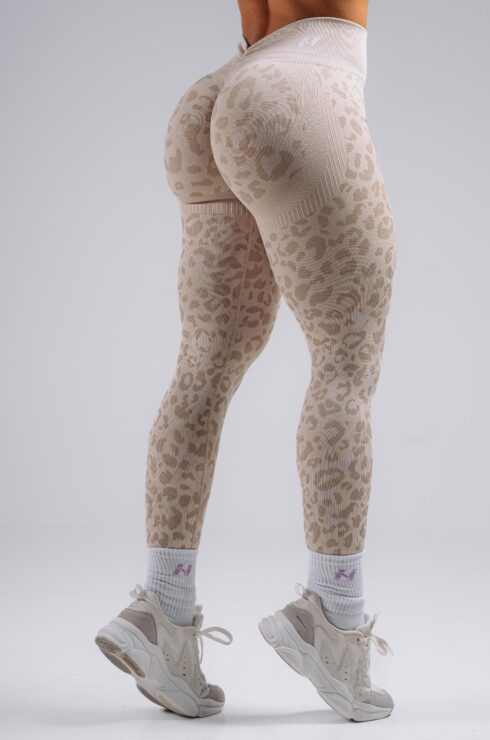
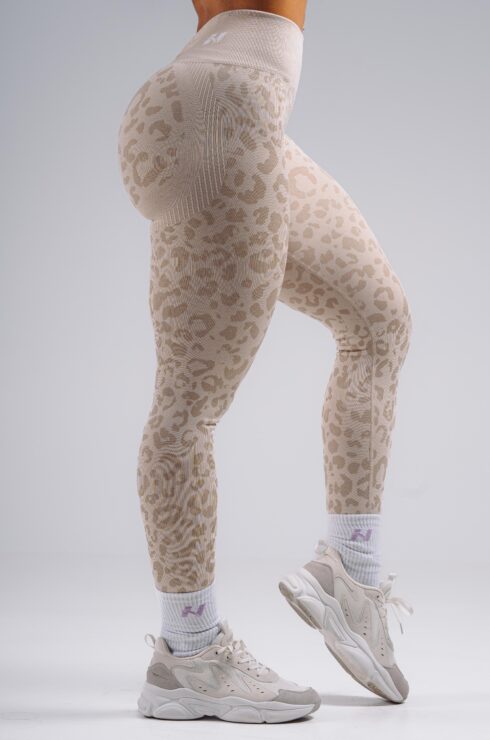
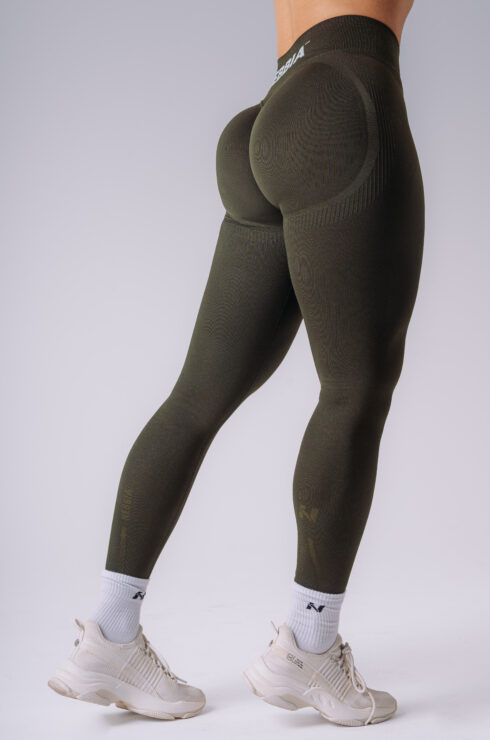
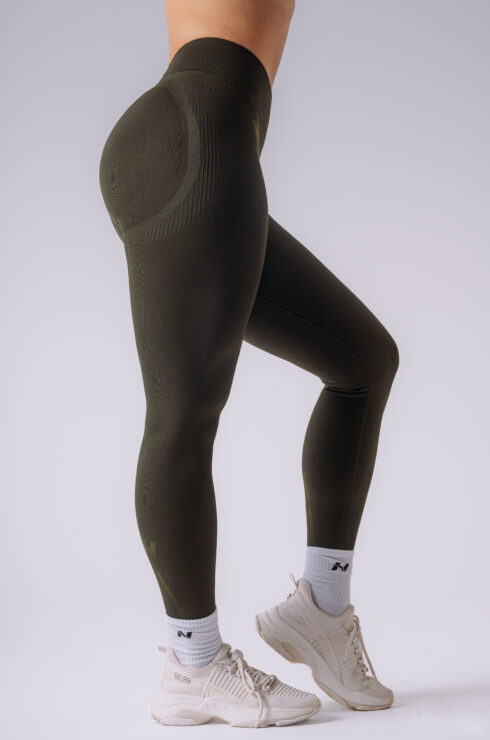
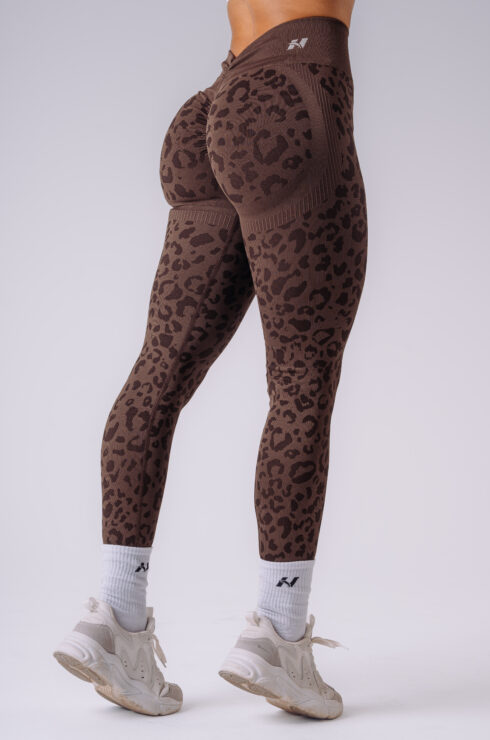
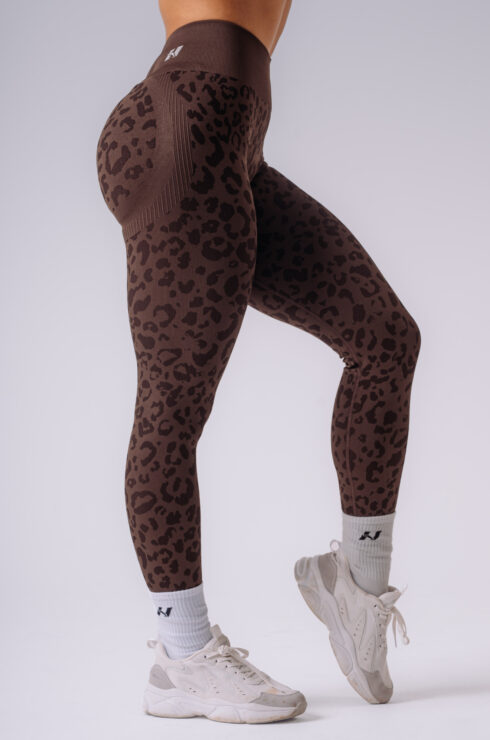
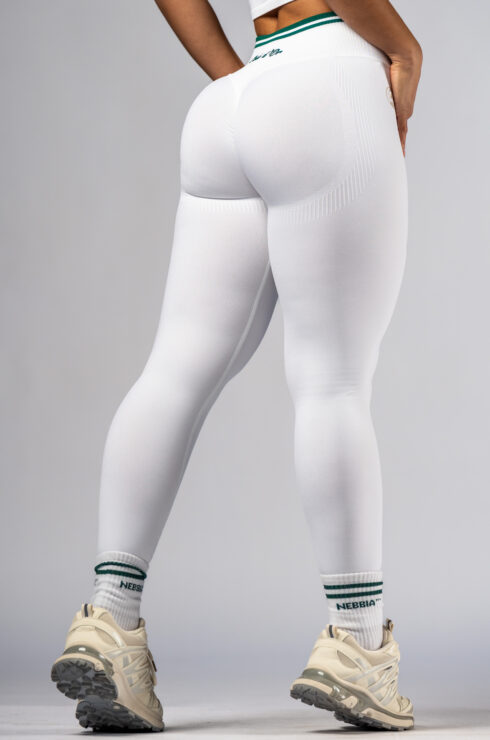
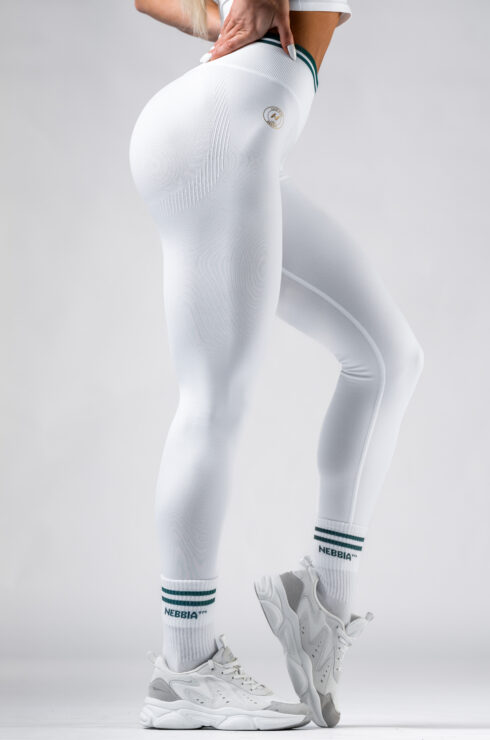
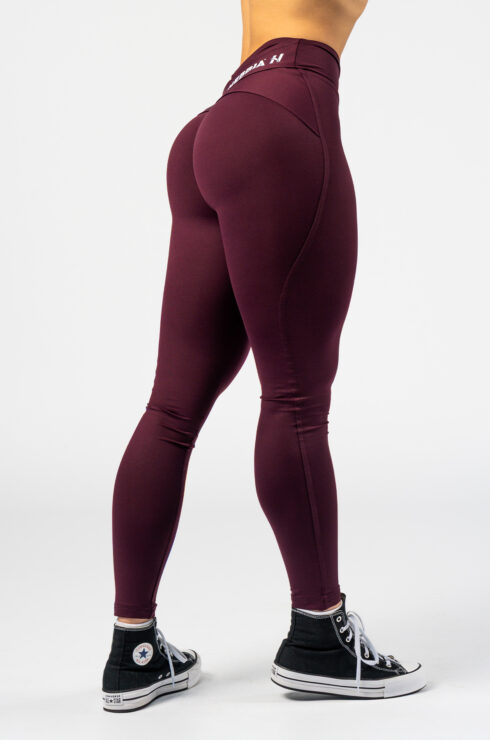
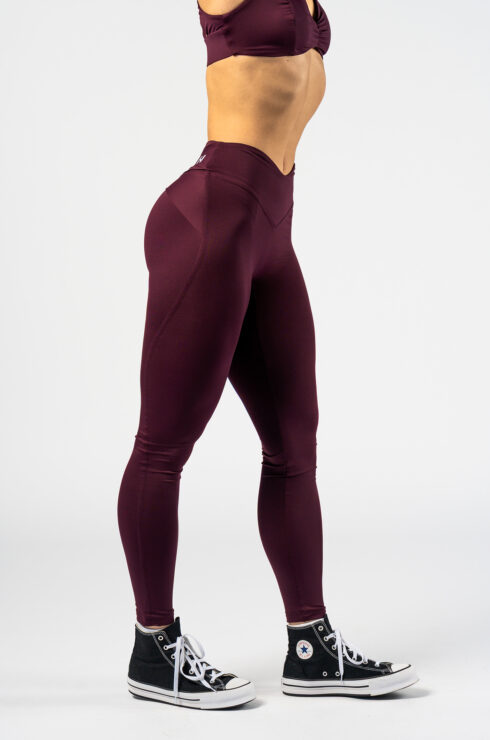
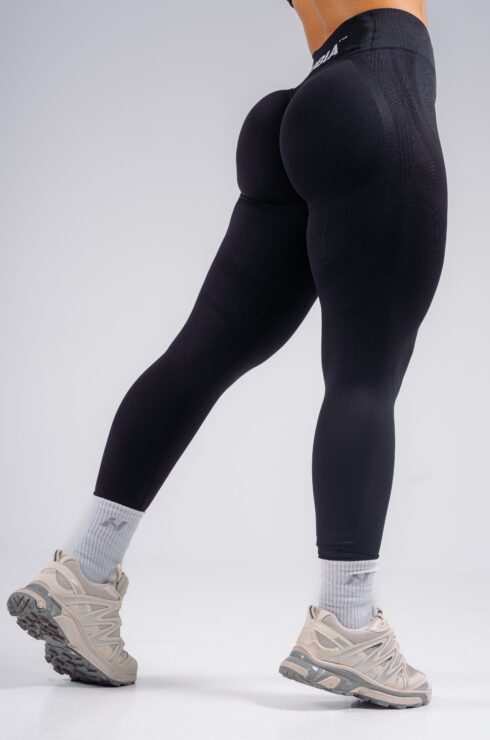
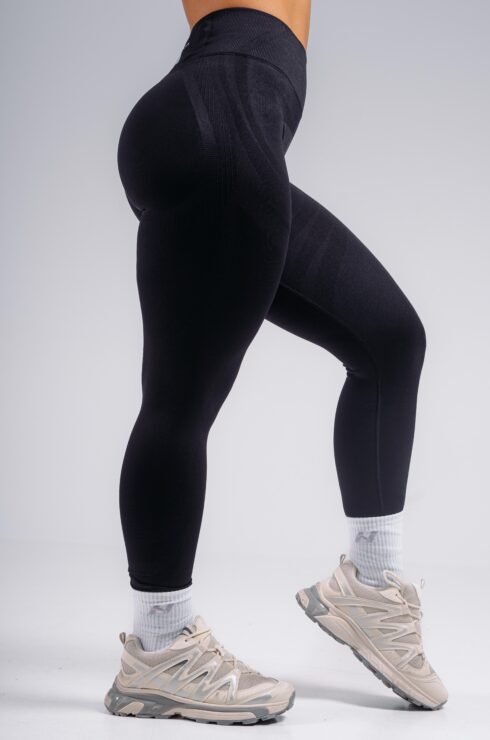
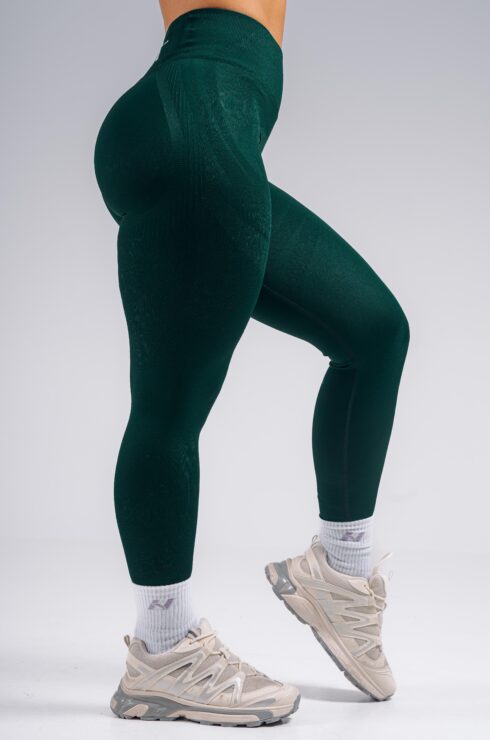
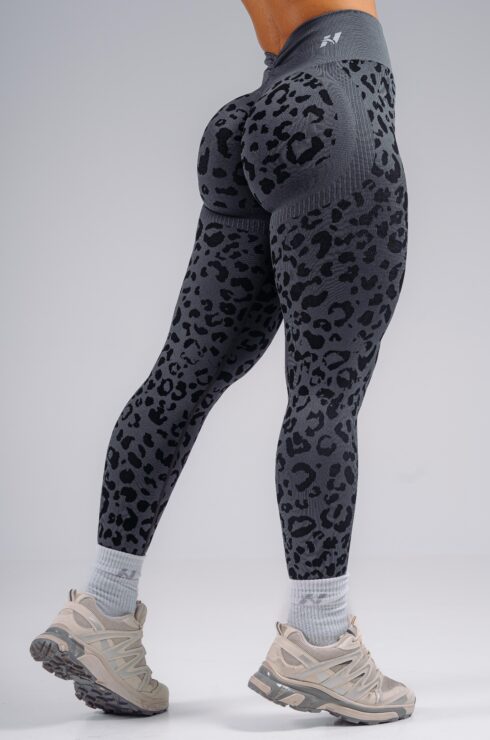
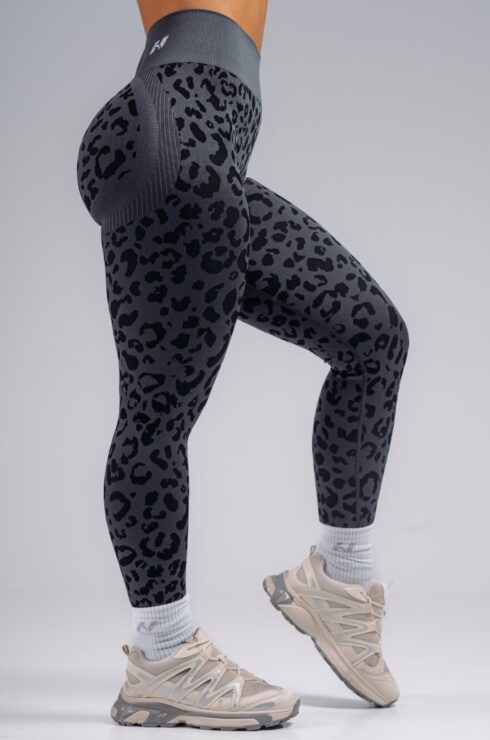
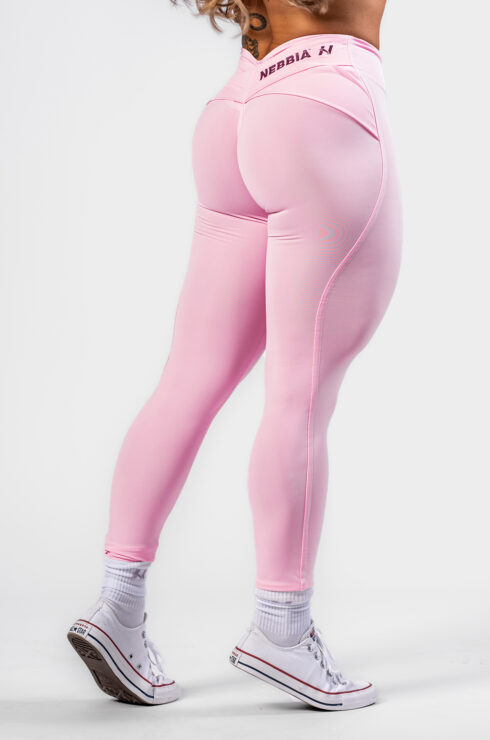
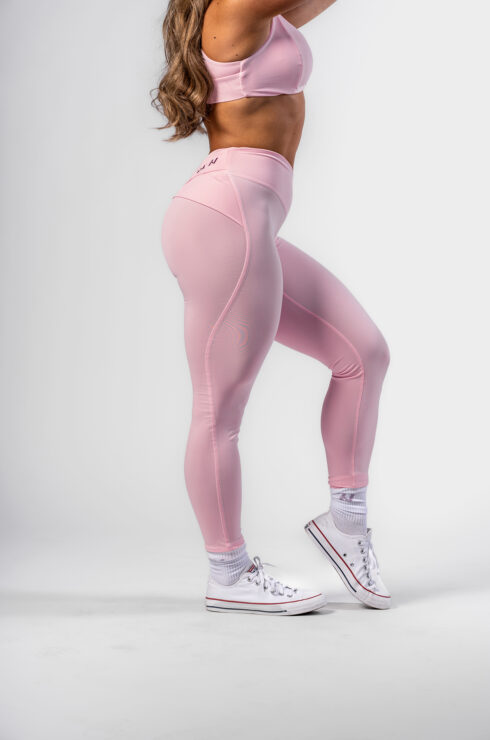
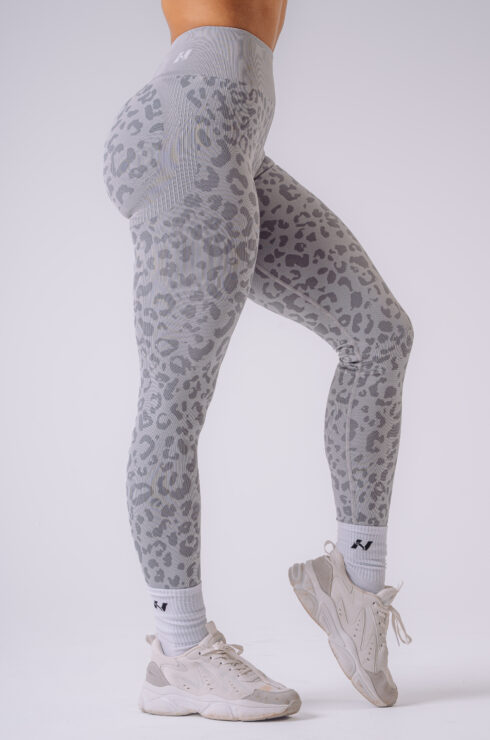
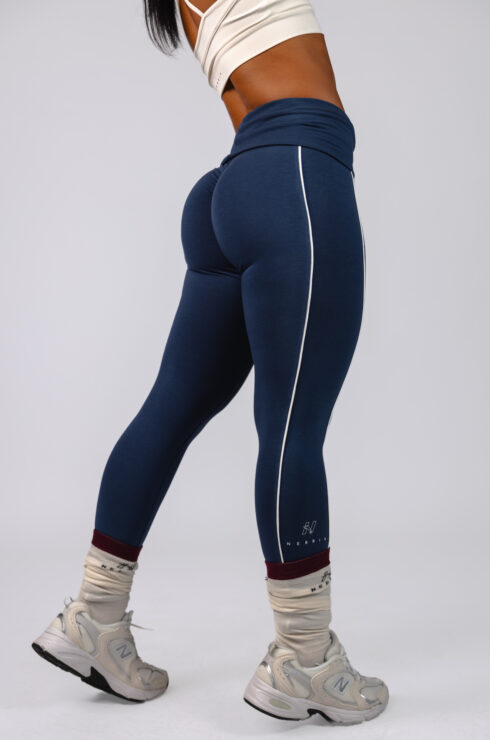
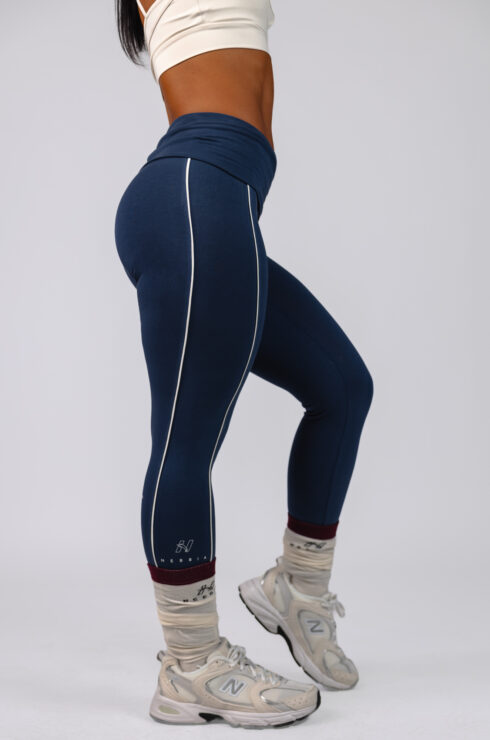
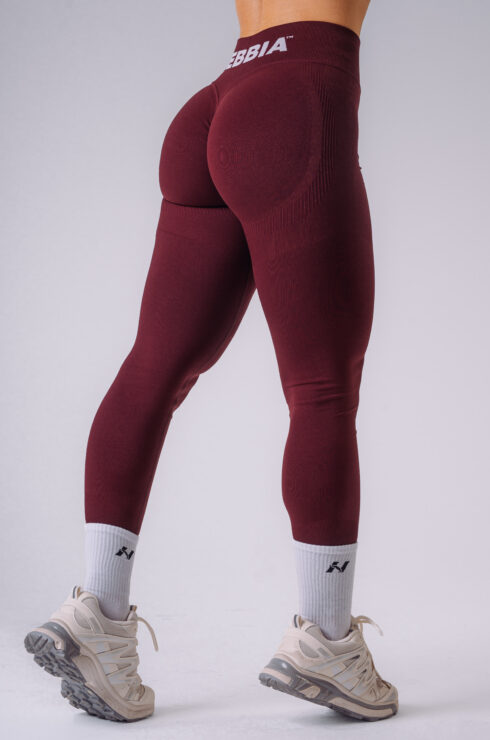
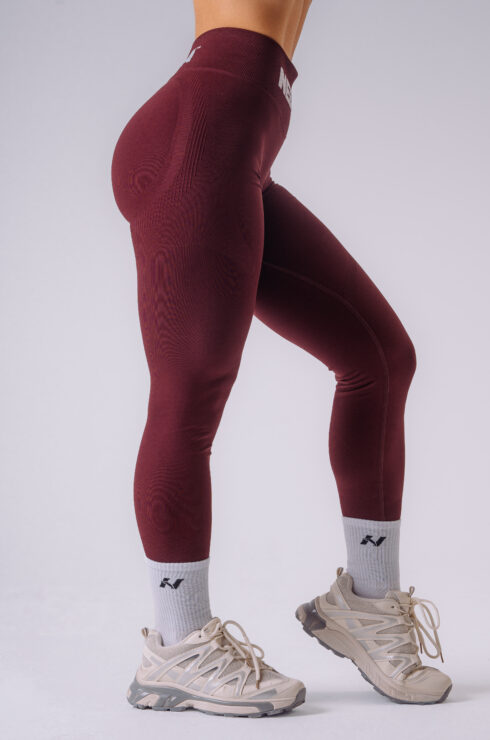
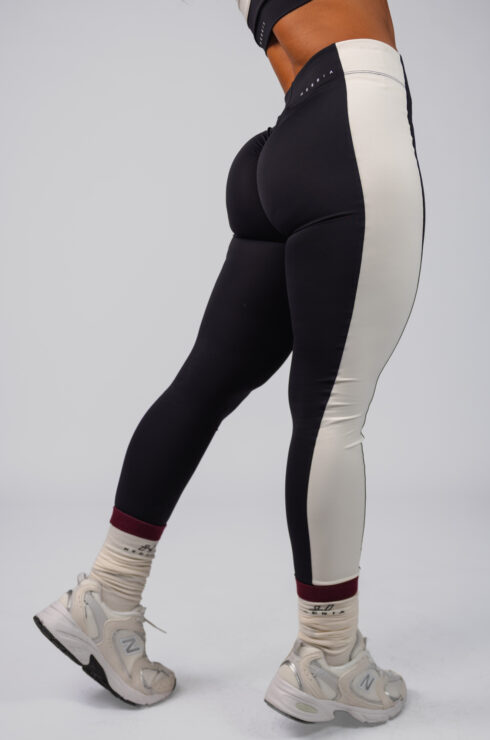
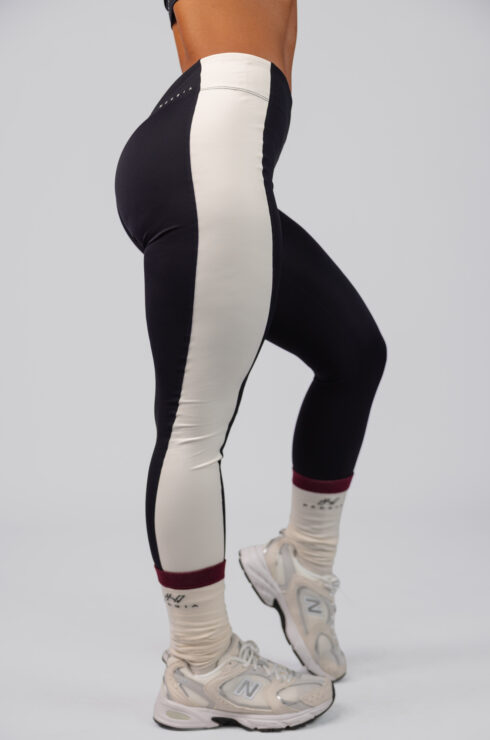
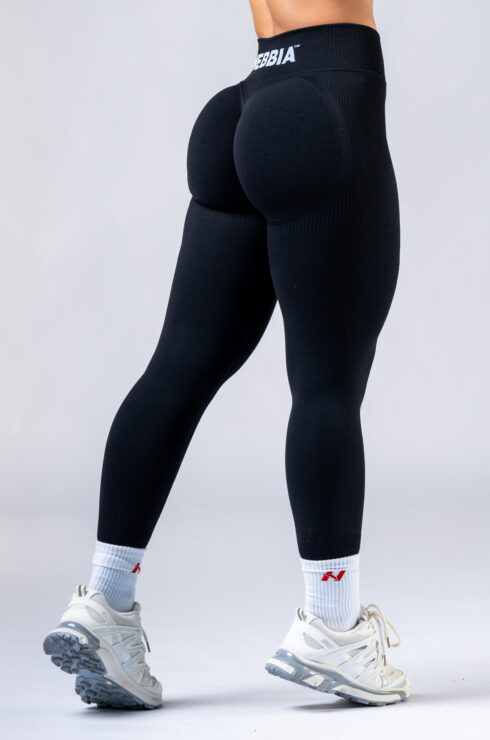
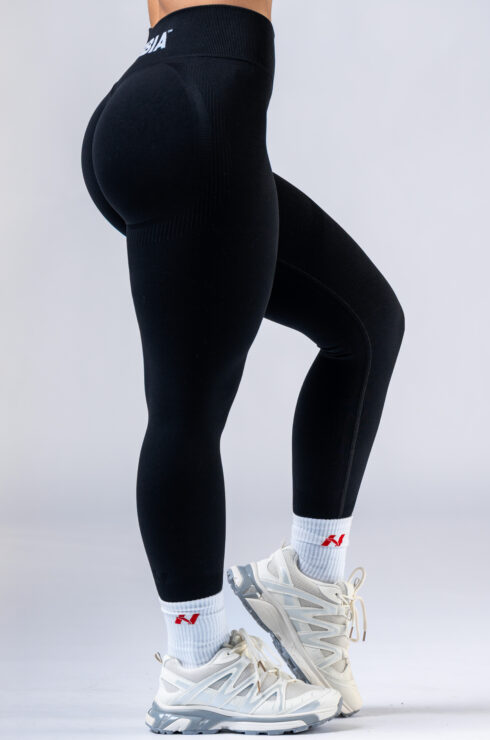
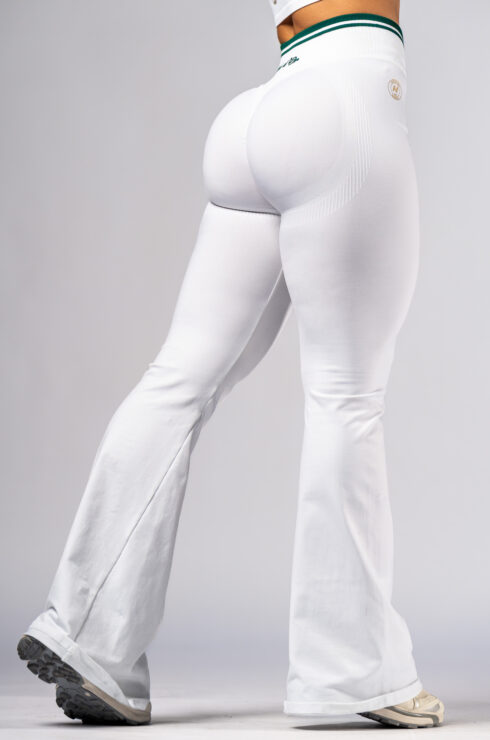
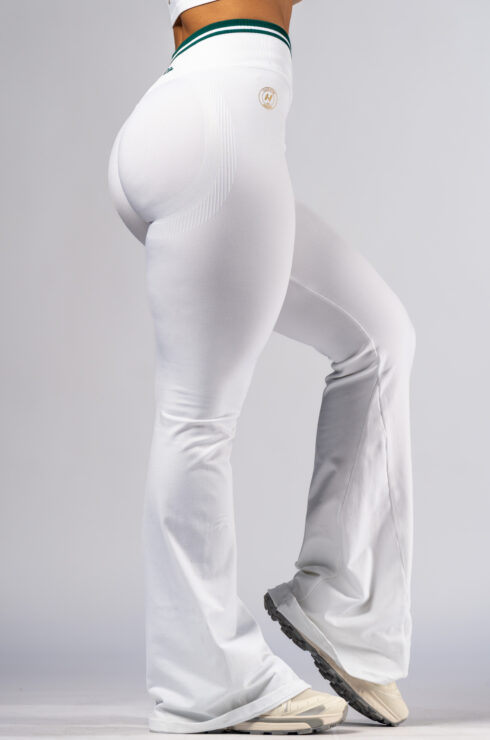
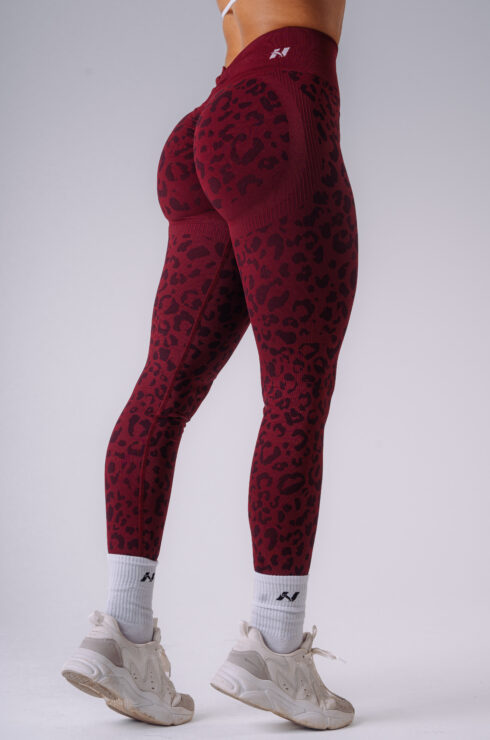
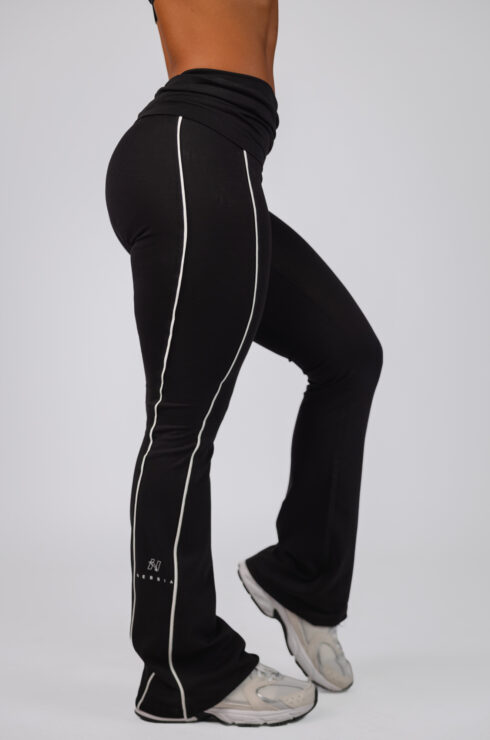
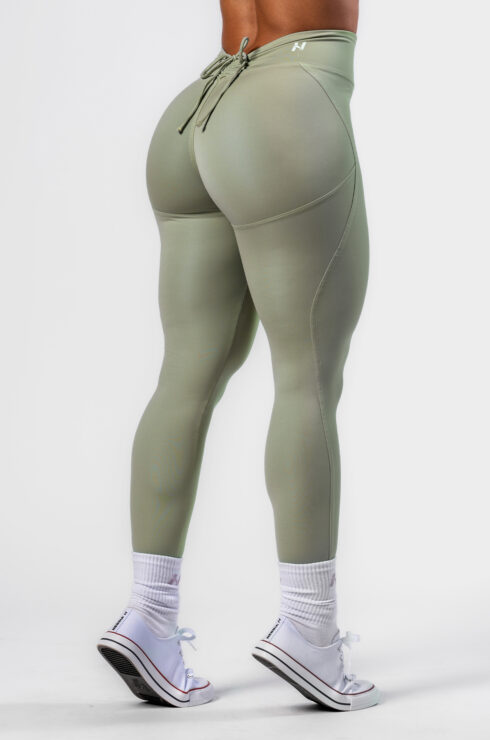
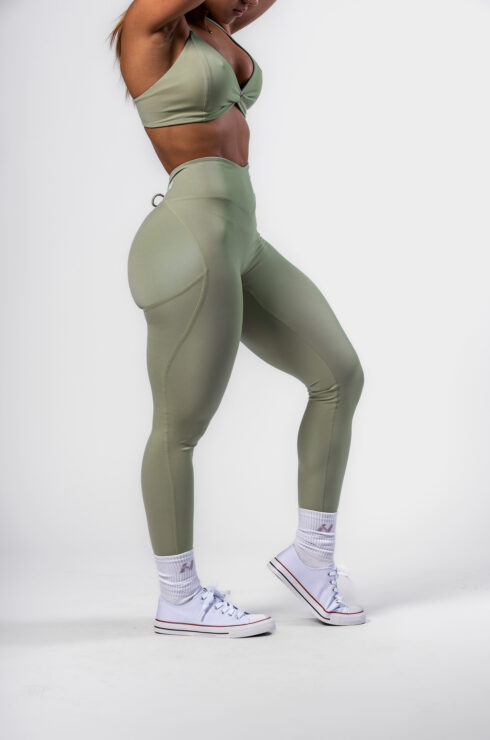
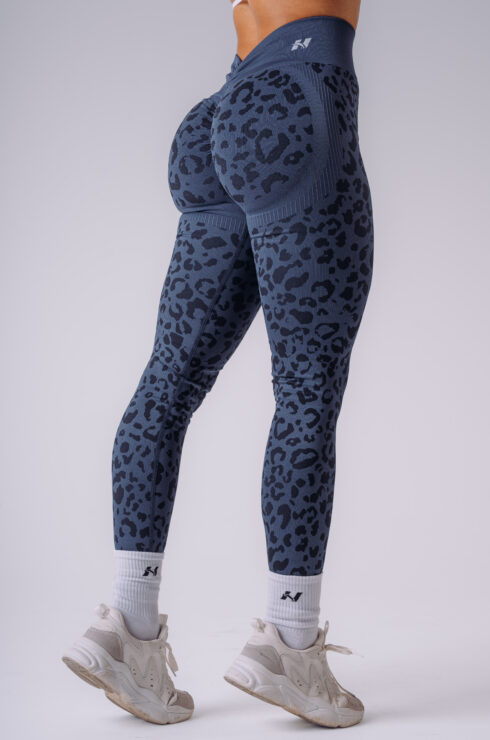
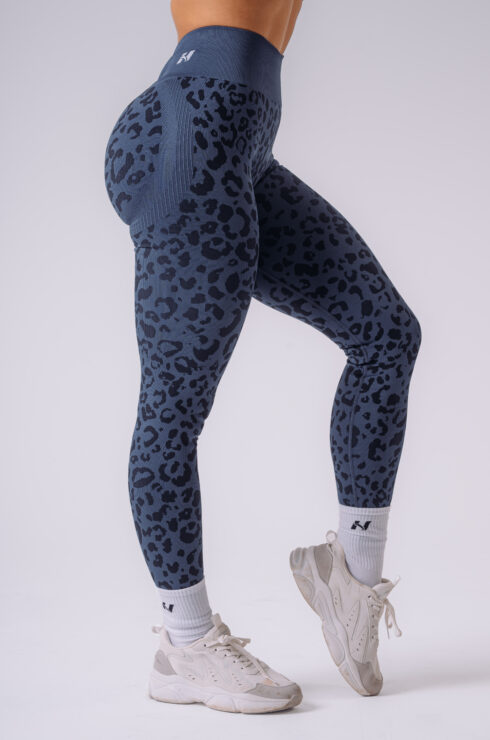
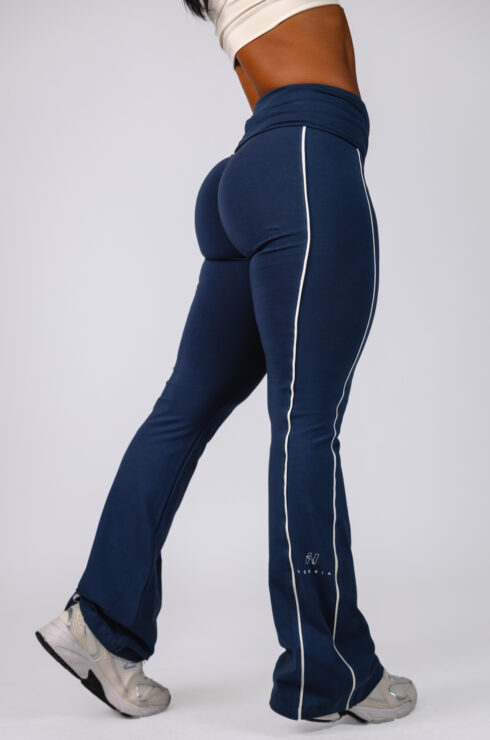
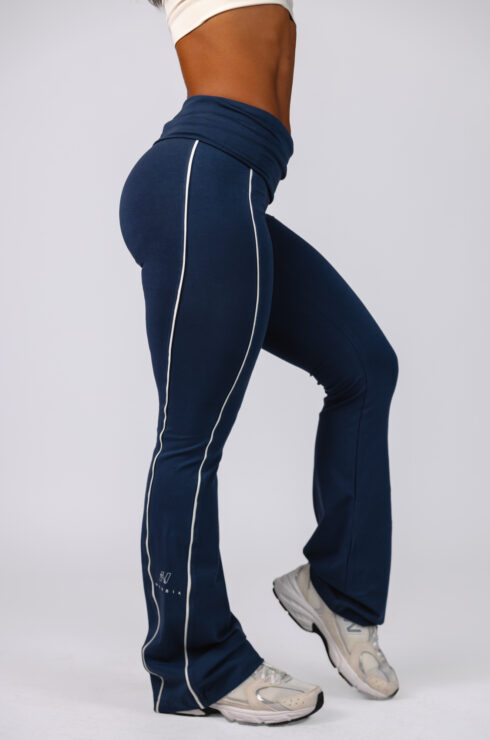
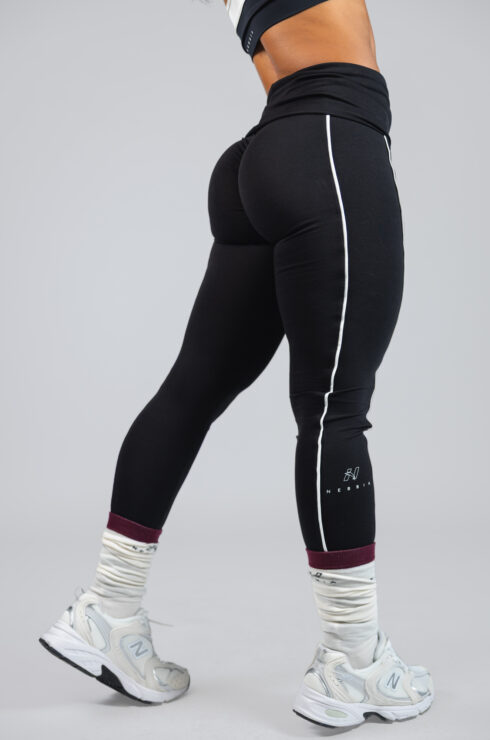
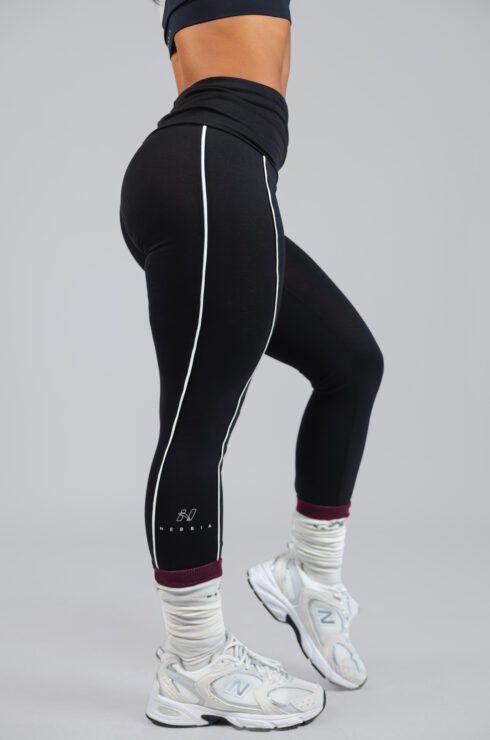
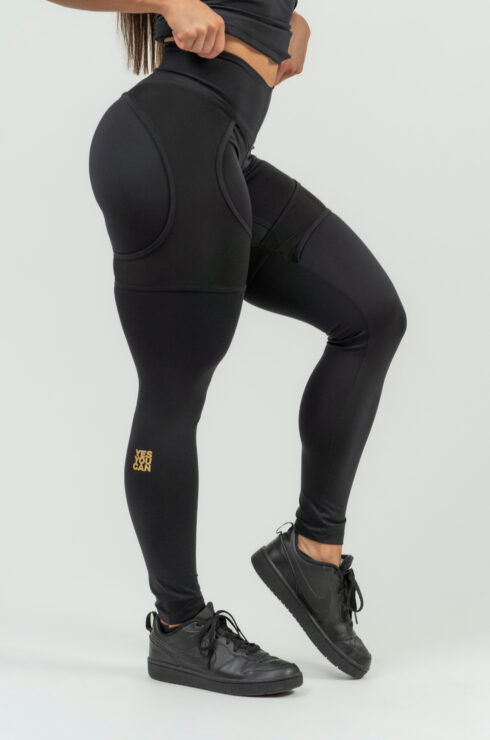
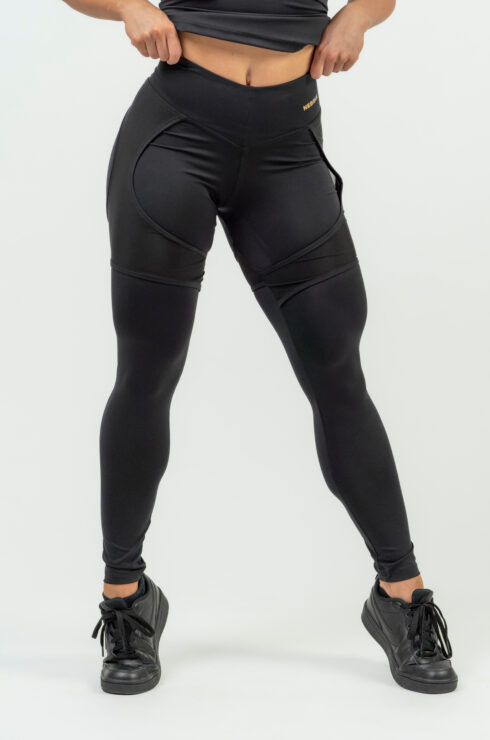
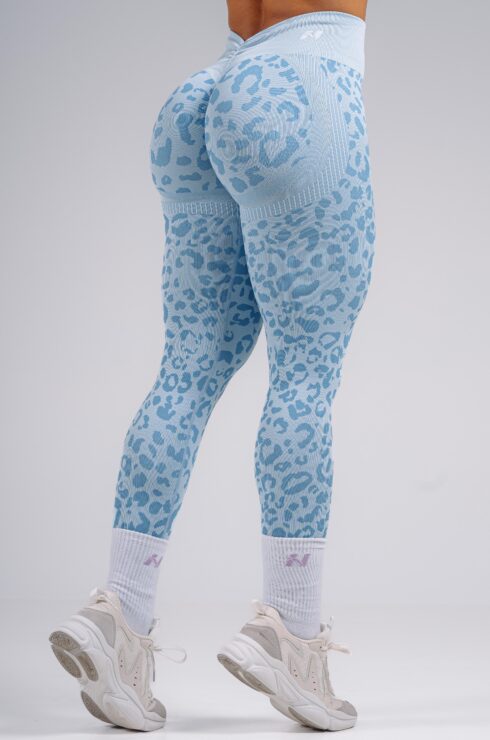
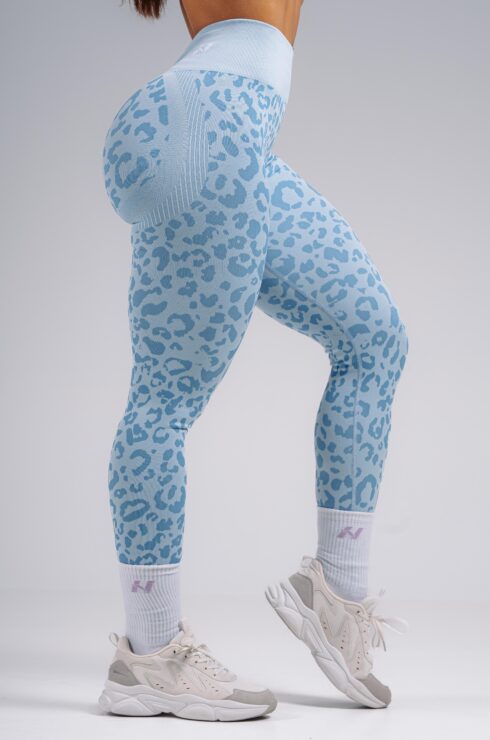
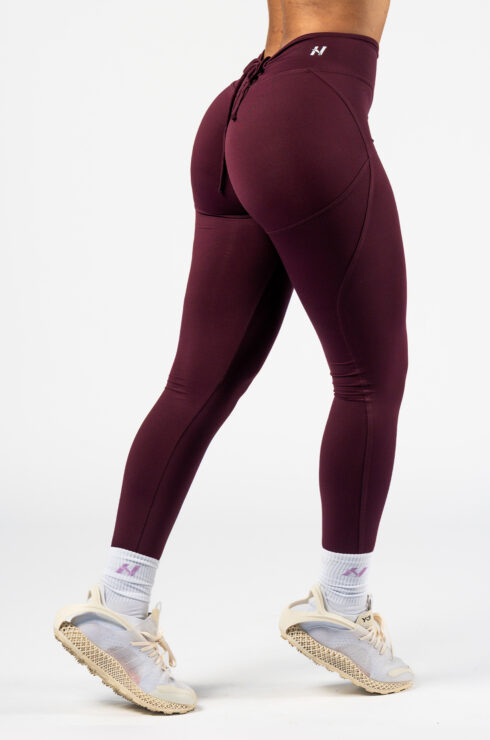
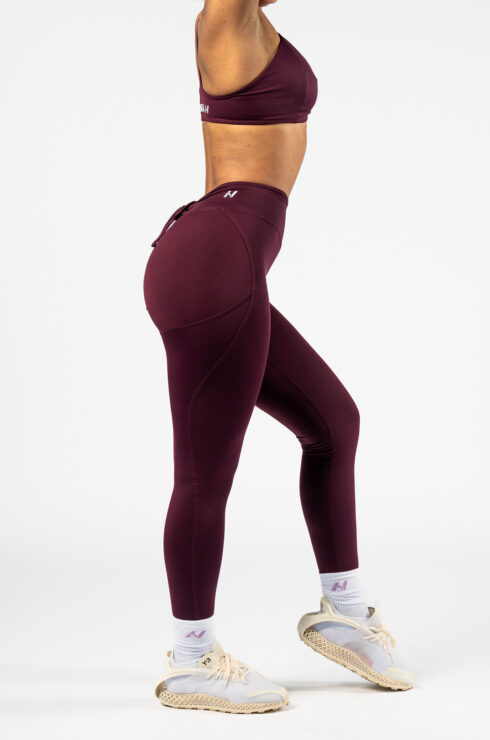
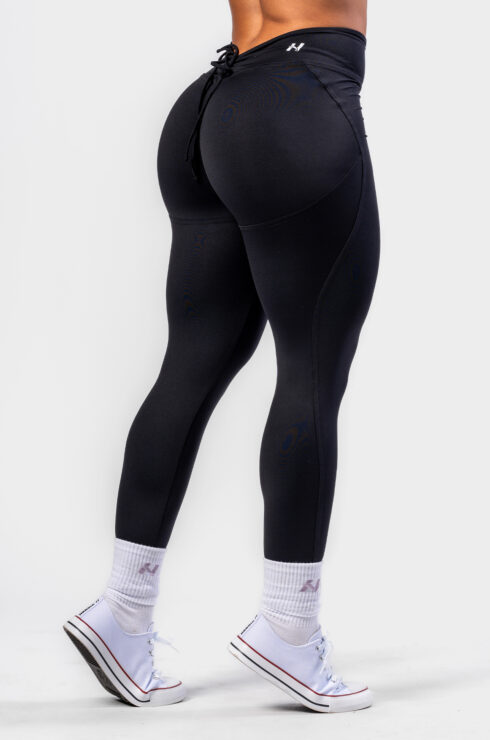
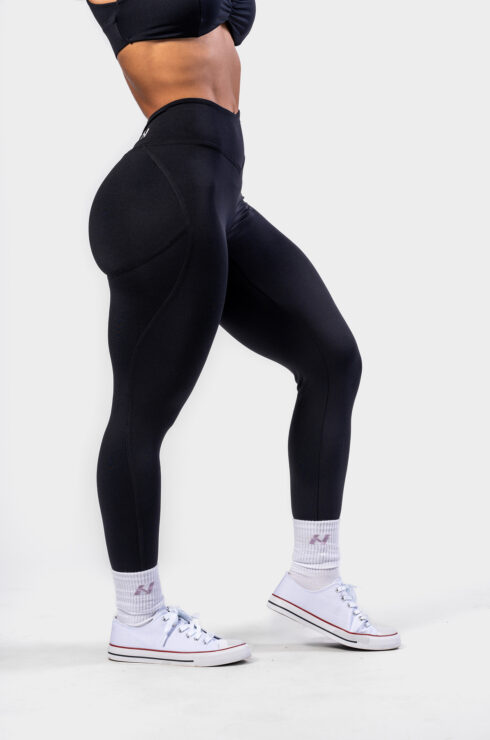
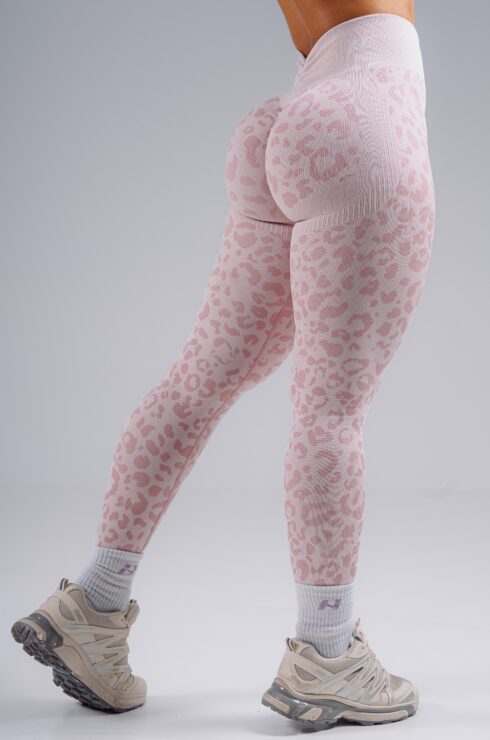
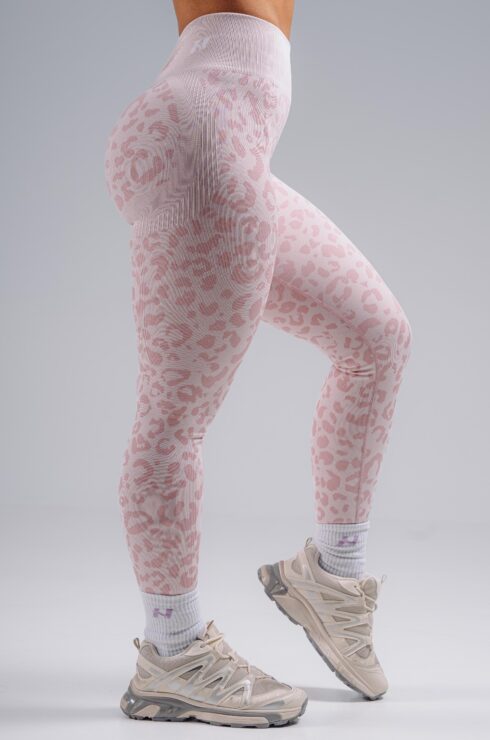
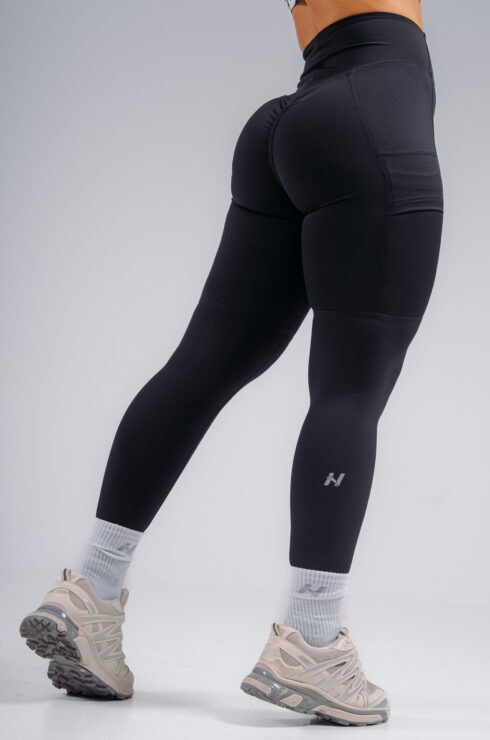
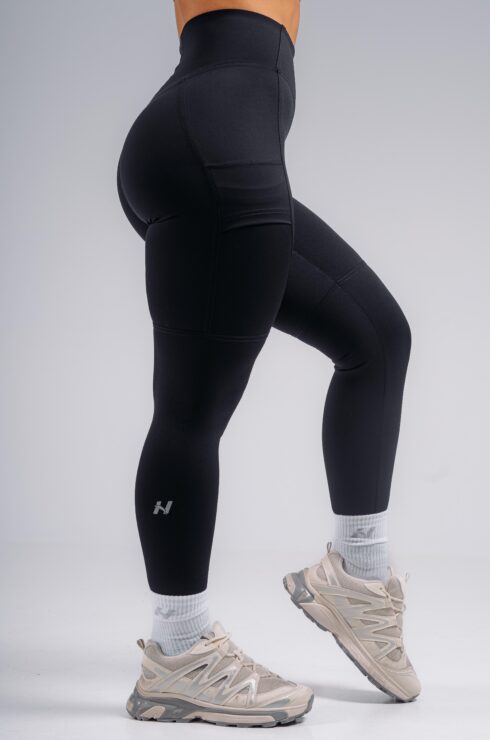
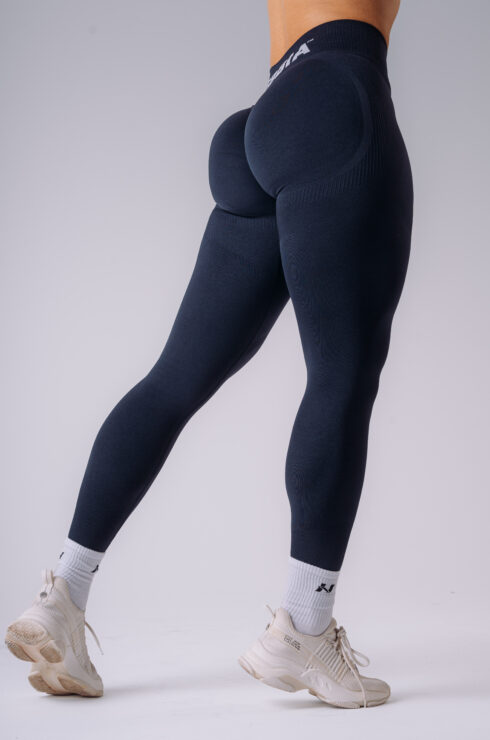
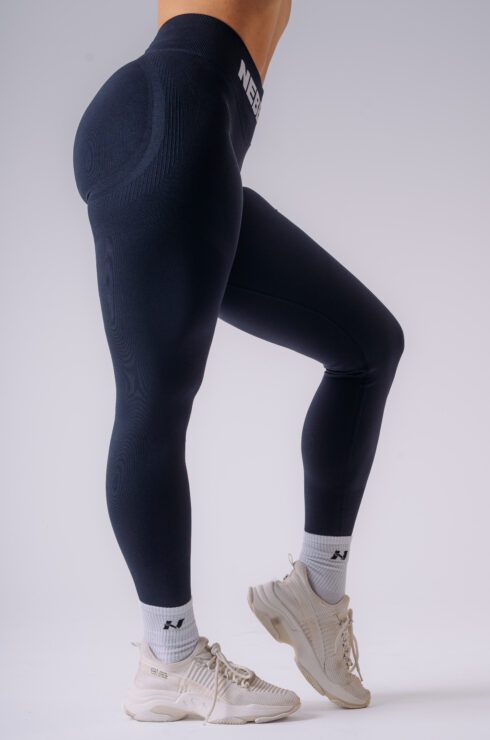
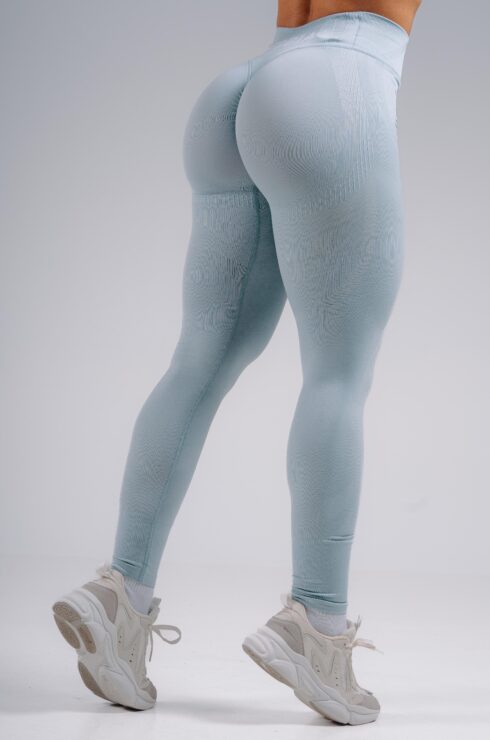
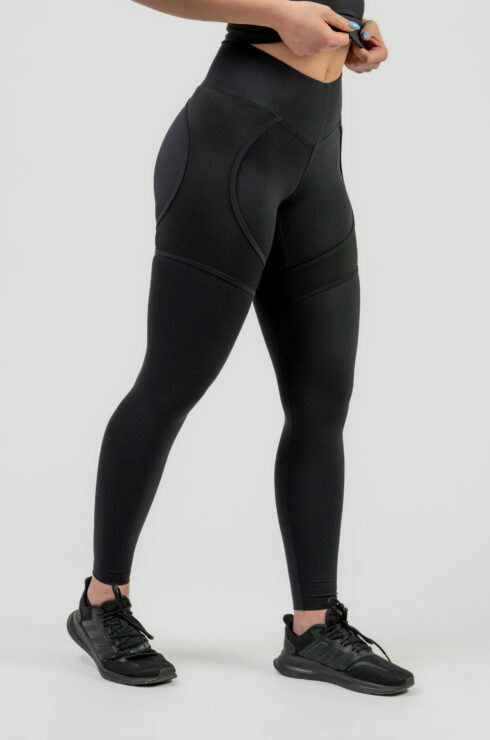
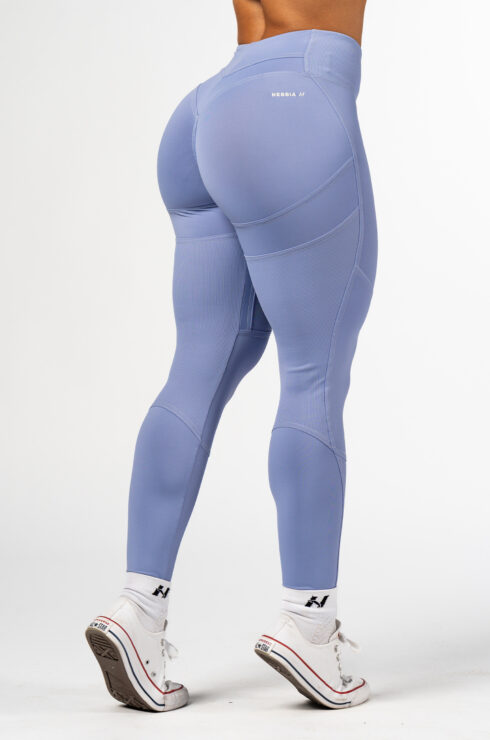
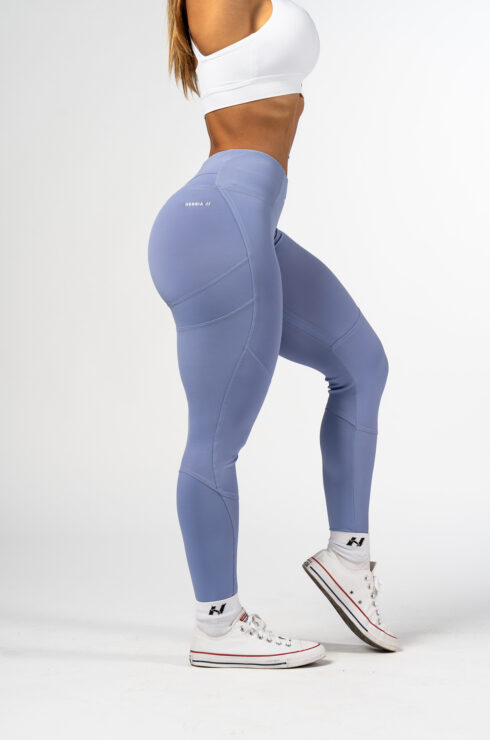
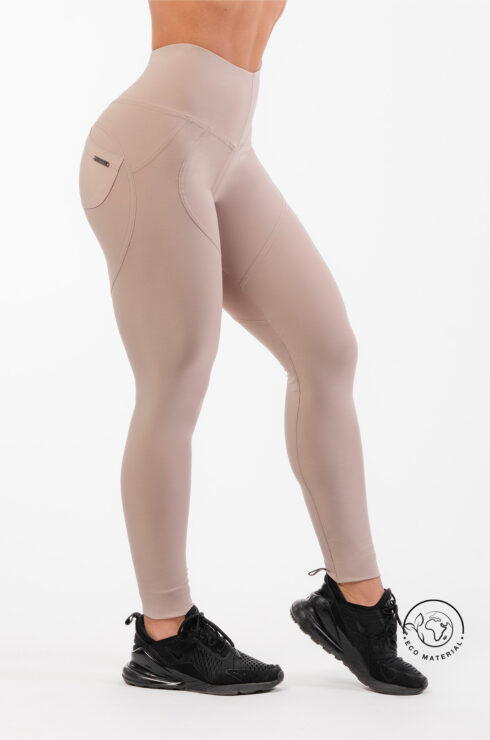
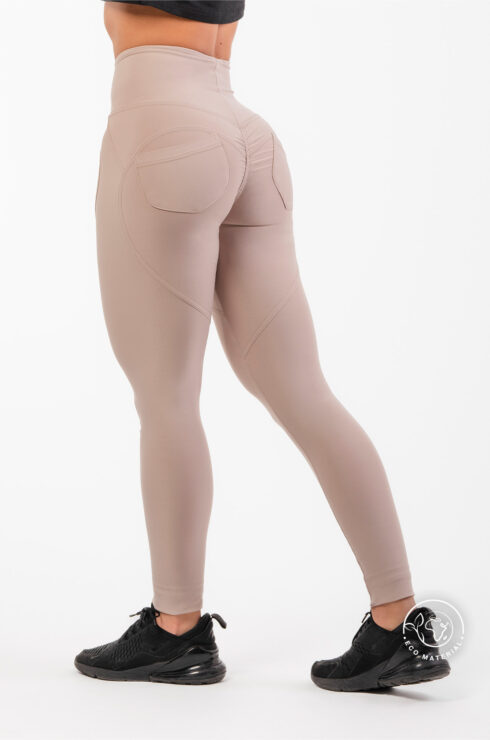
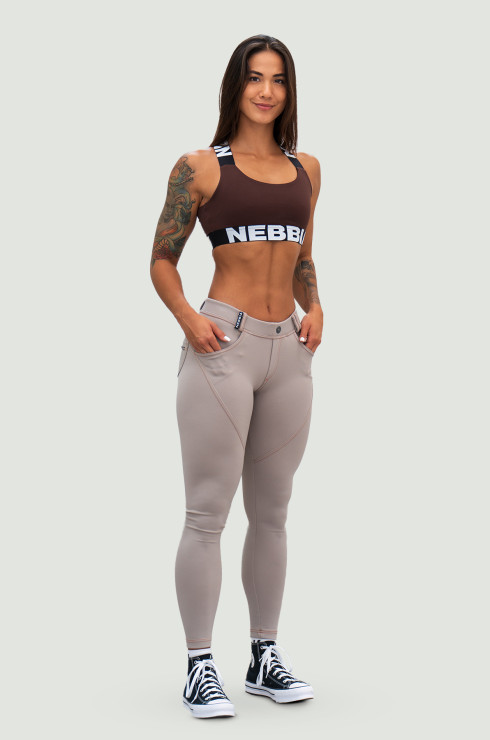
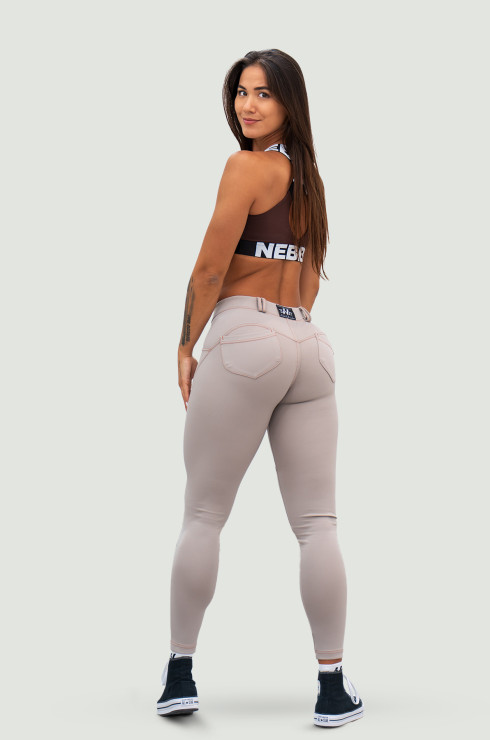
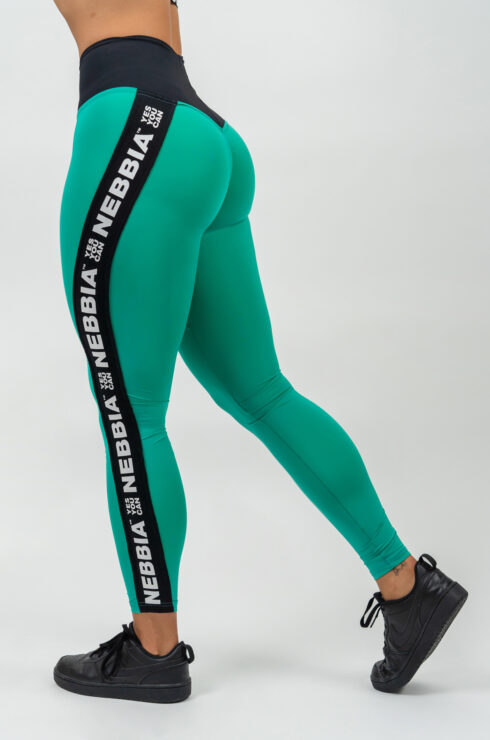
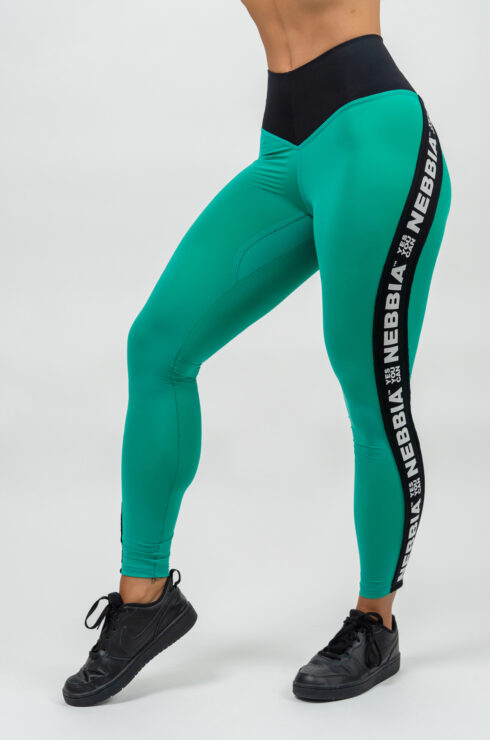
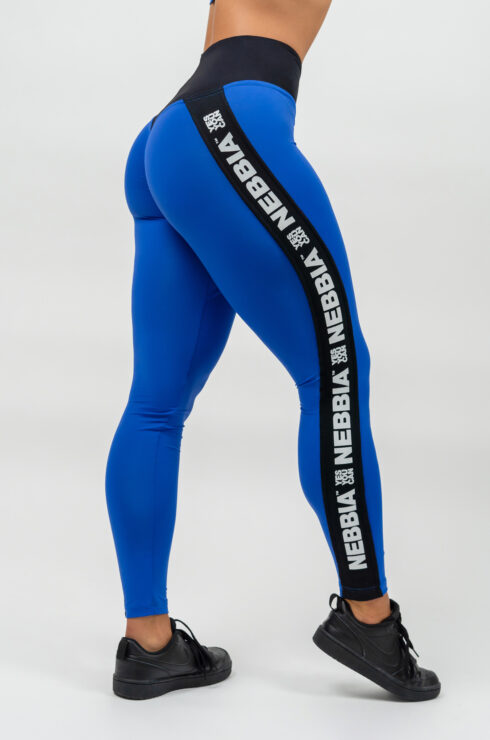
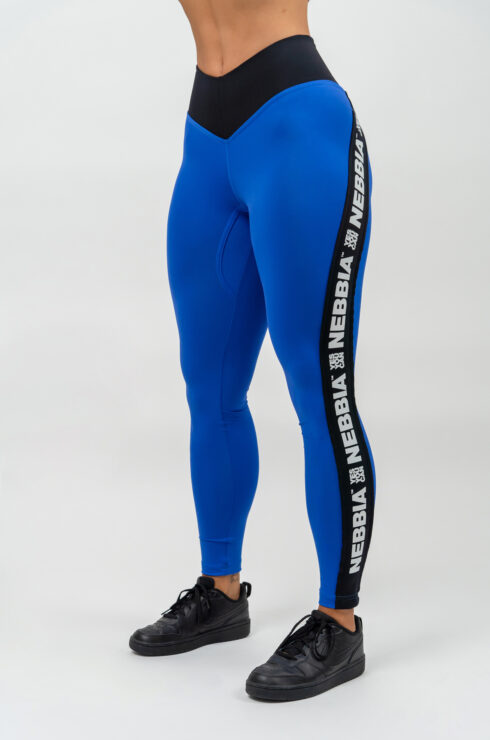
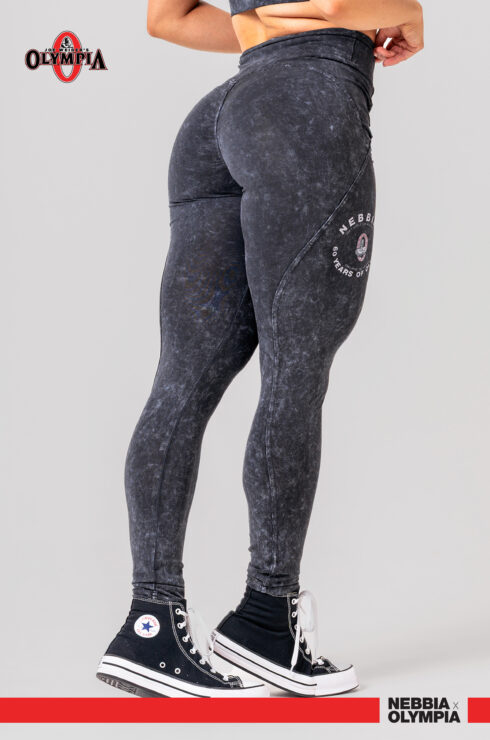
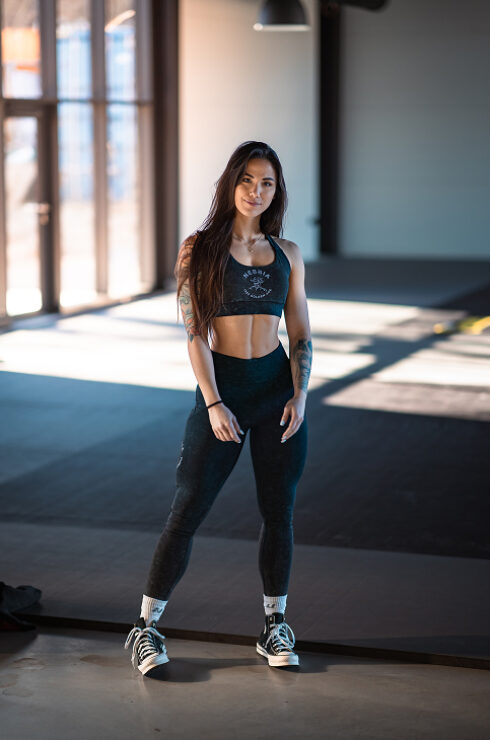
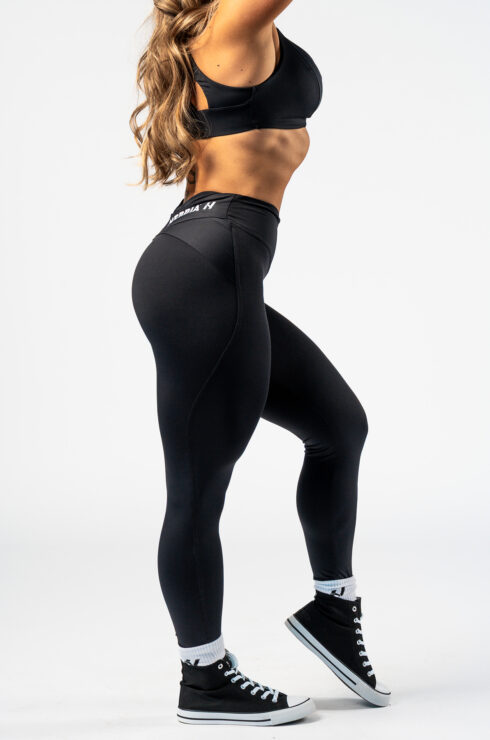
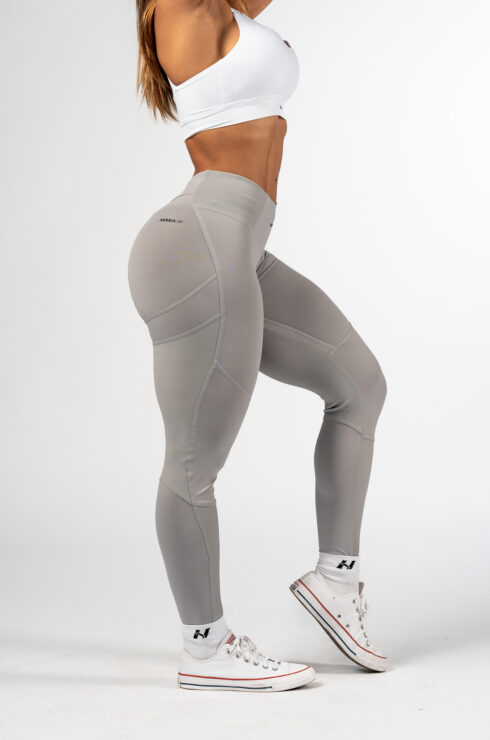
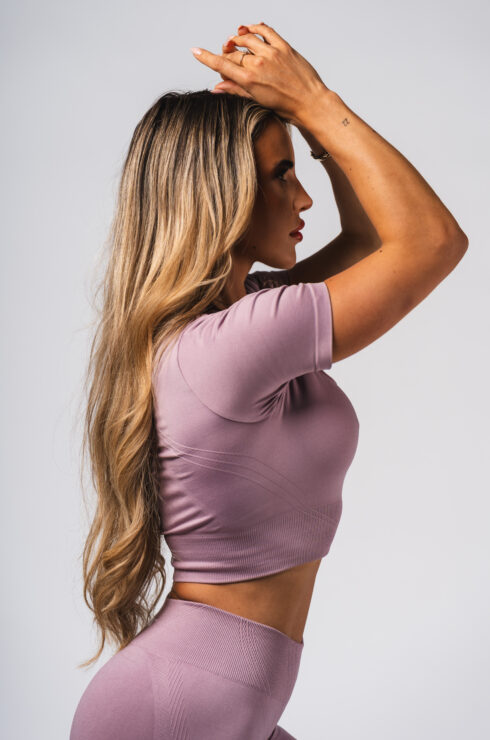
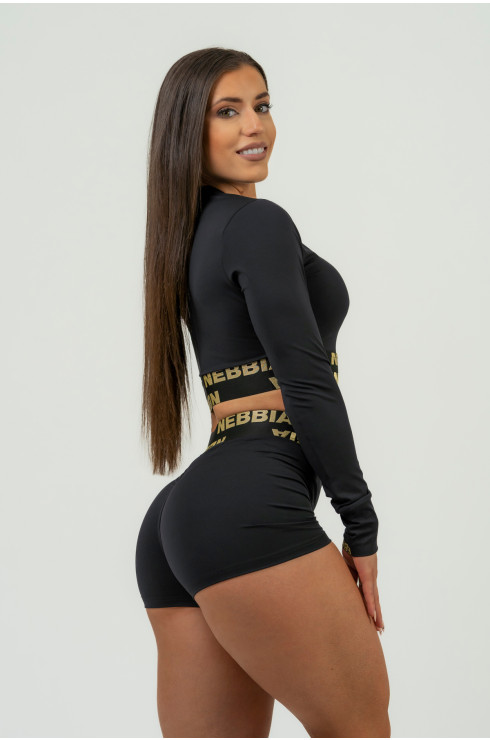
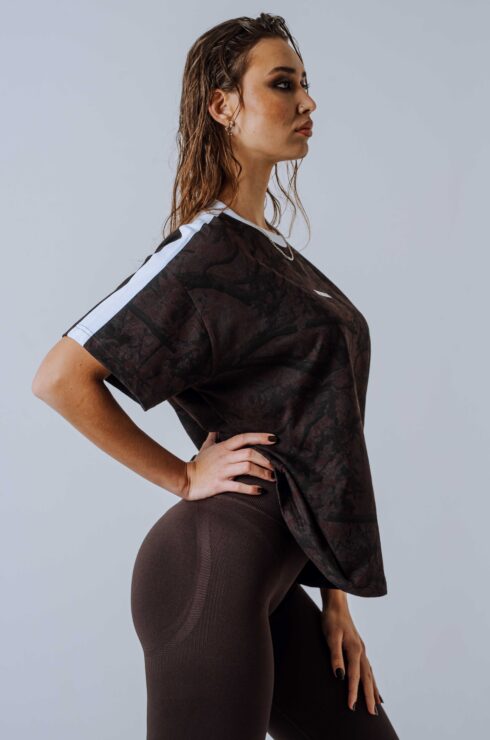
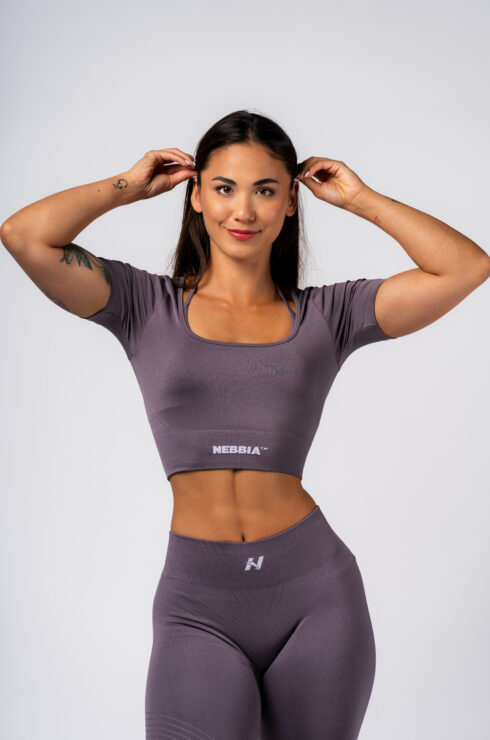
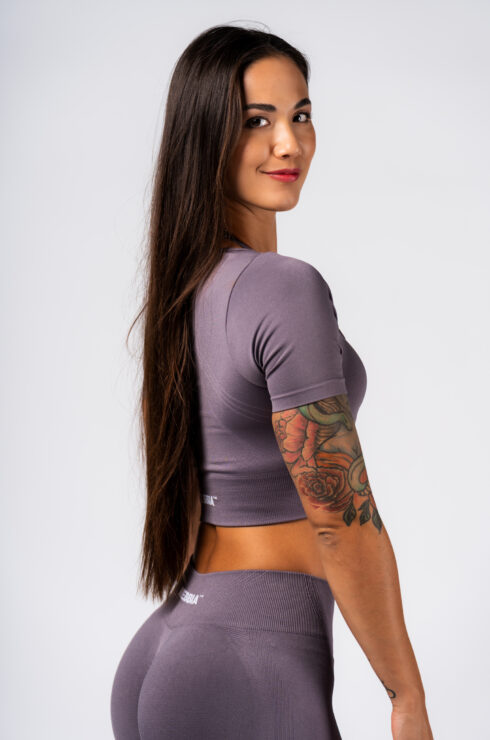
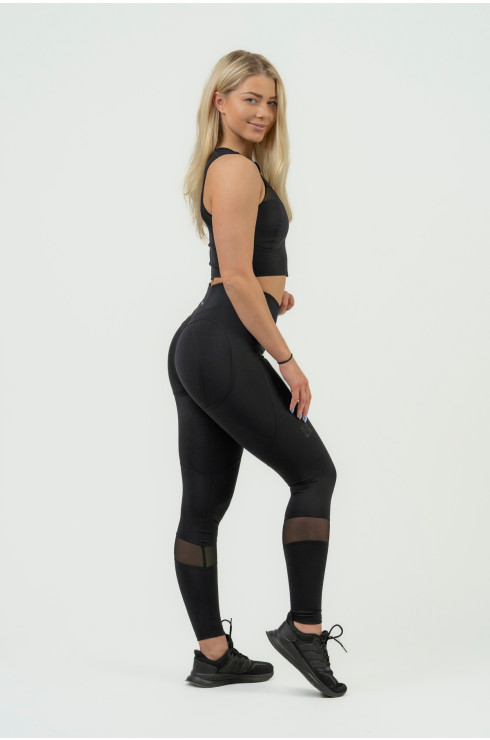
Women’s leggings are the natural partner for a sports bra, and a matching set looks put together while feeling secure. A high-waisted pair stays in place when you bend, jump or stretch, and it pairs well with a shorter bra or crop top because the waistband holds everything smoothly. Flat seams and a four-way stretch fabric reduce chafing, which matters most for running, cycling and strength training. For a seamless look, pick a bra and leggings in the same colour family, or a neutral shade that goes with several tops.
Women’s shorts
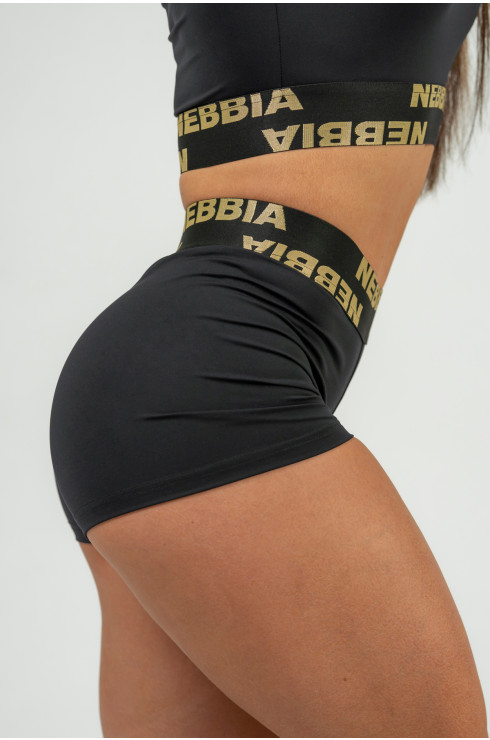
Women’s shorts are the right choice for warm weather, running and high-energy classes where you want freedom of movement. Running shorts with a built-in liner offer light support and cut down on thigh rub, and a medium-length cycling-style short stays put during squats and lunges. Pair them with a supportive sports bra, since the lighter lower half makes it easy to underestimate how much support the top half needs. A high waist on the shorts, combined with a cropped sports bra, gives a clean line that suits both the gym and the street.
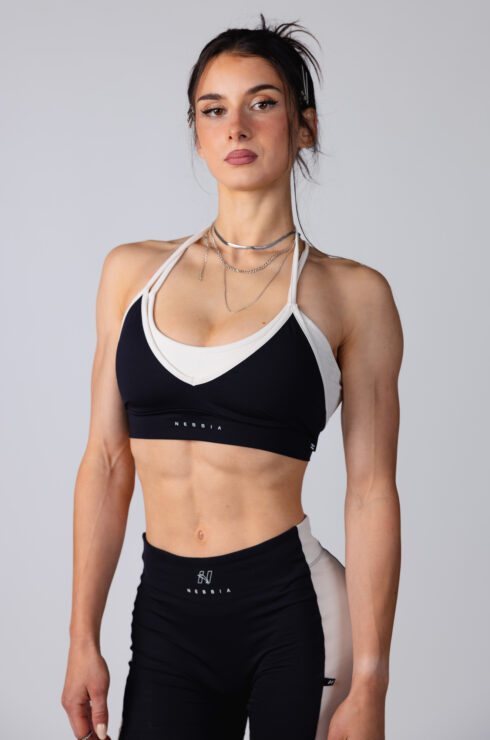
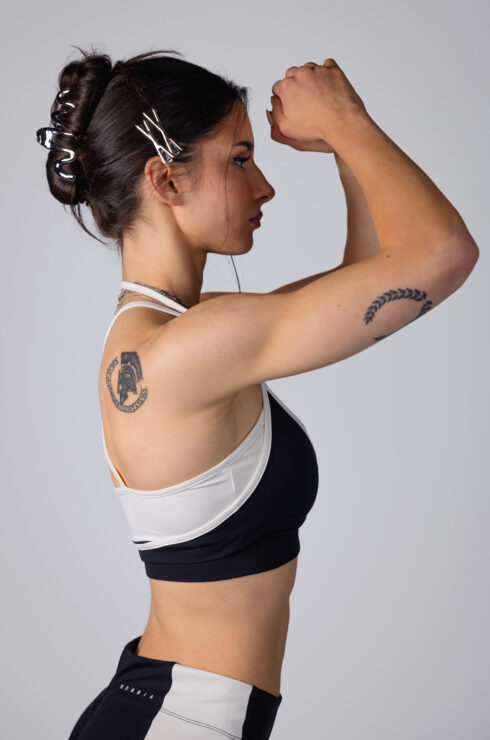
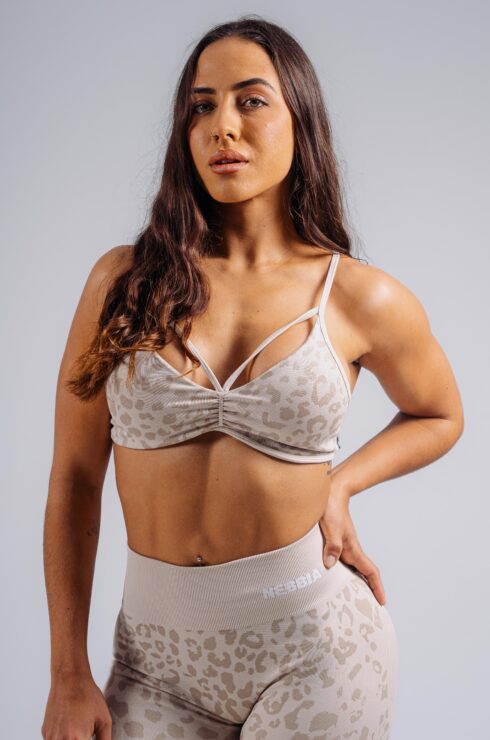
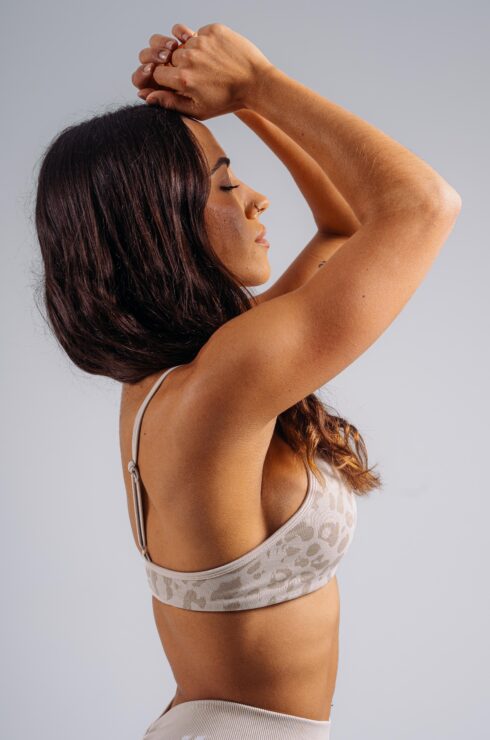
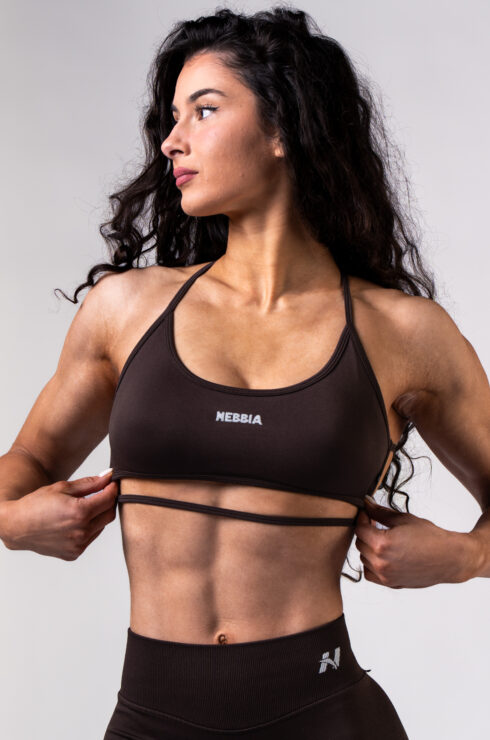
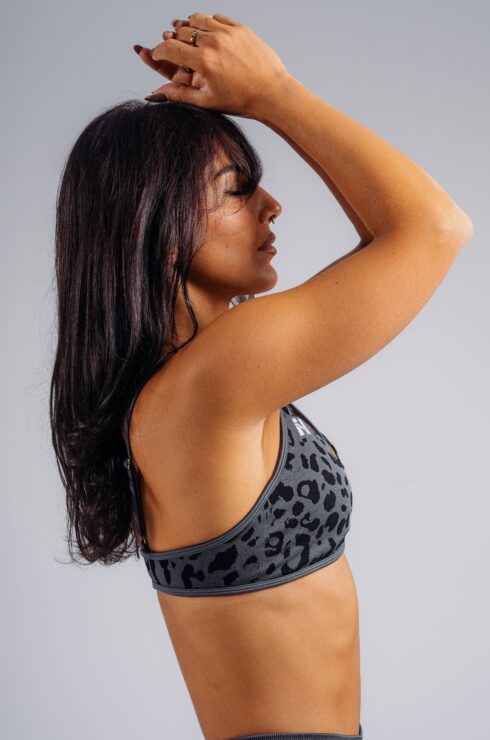
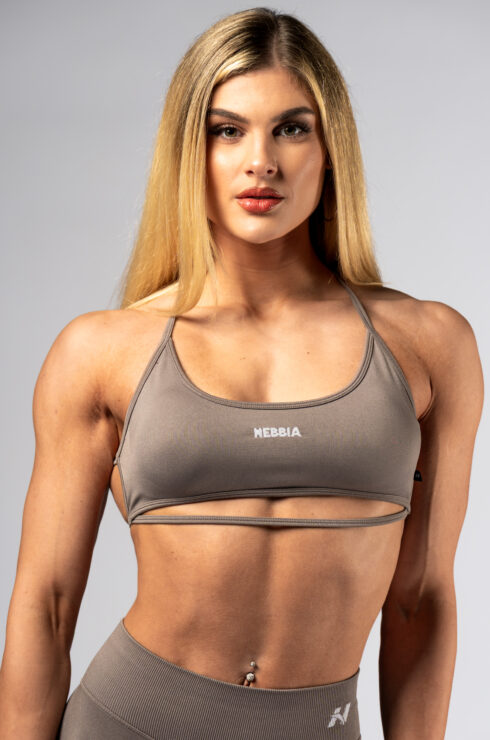
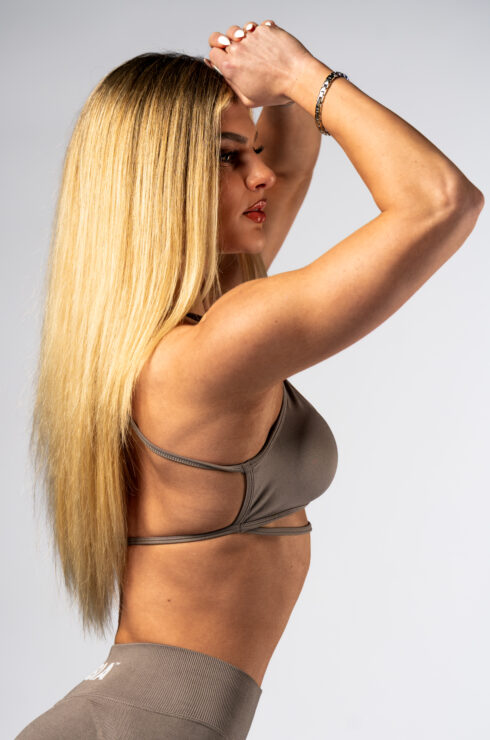
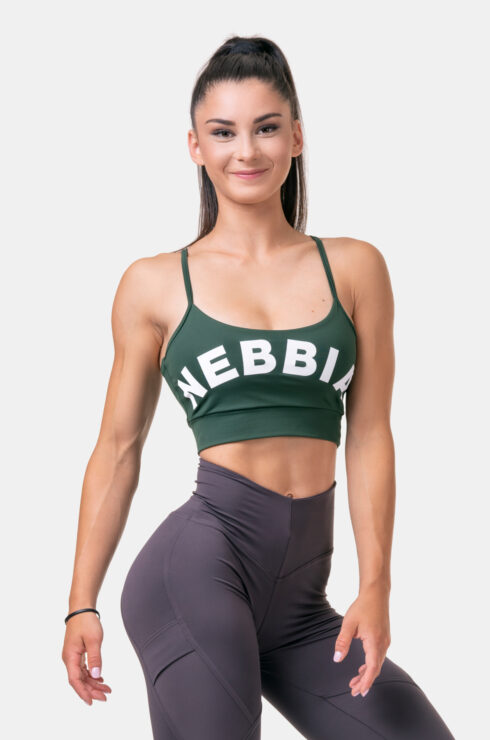
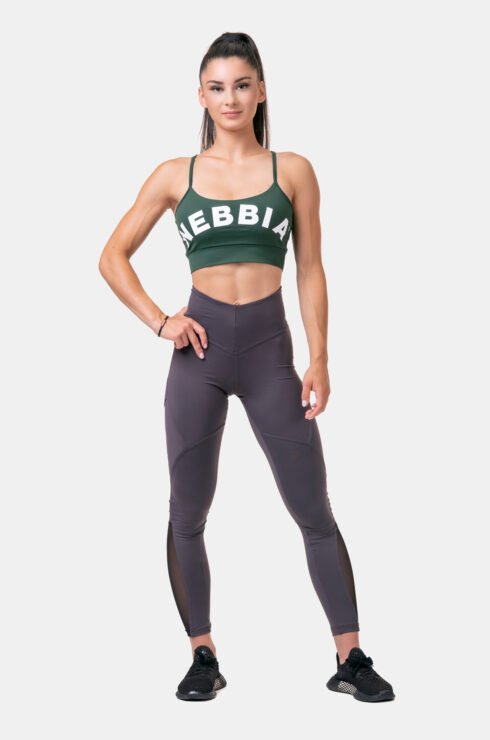
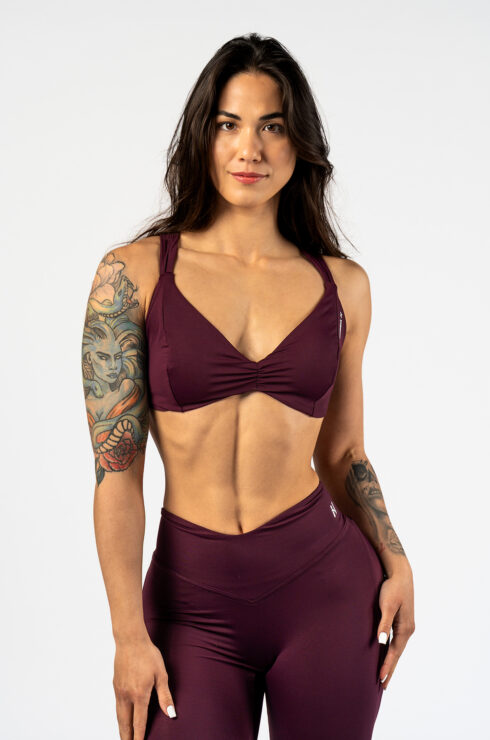
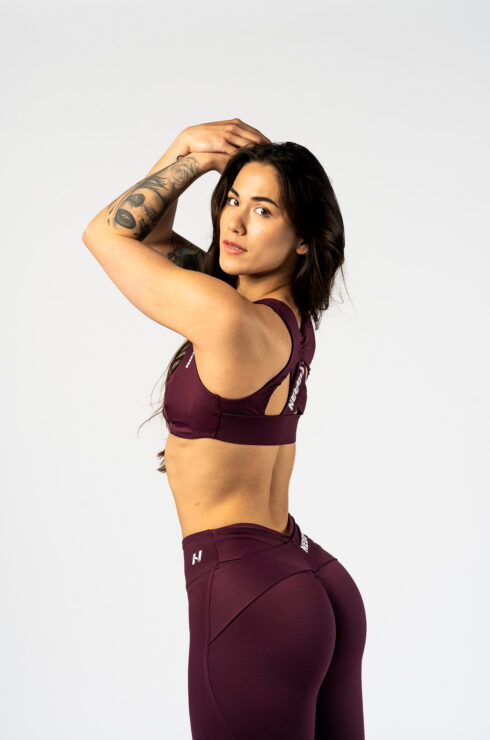
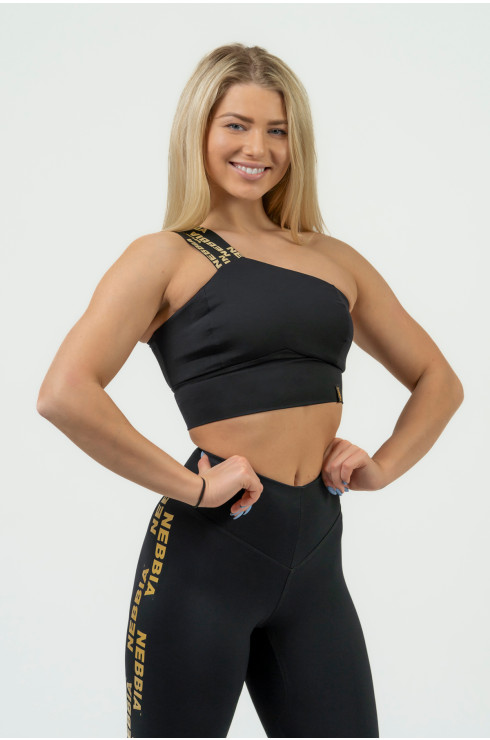
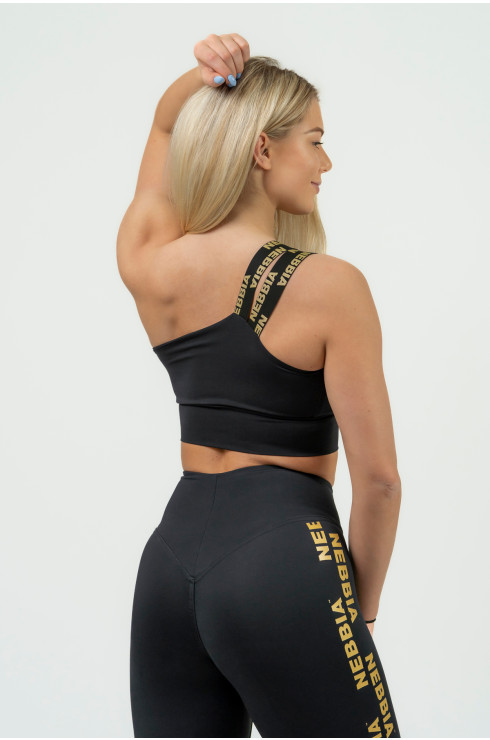
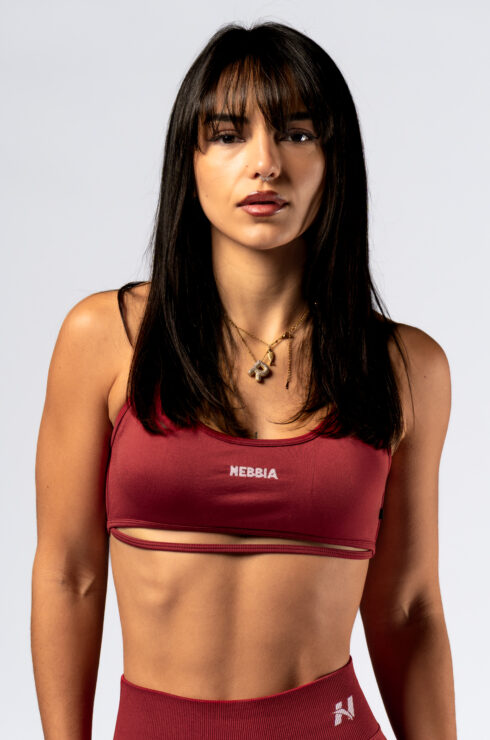
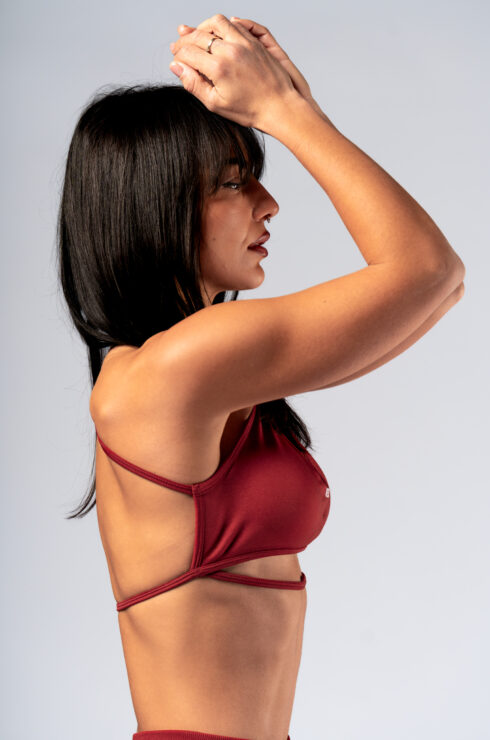
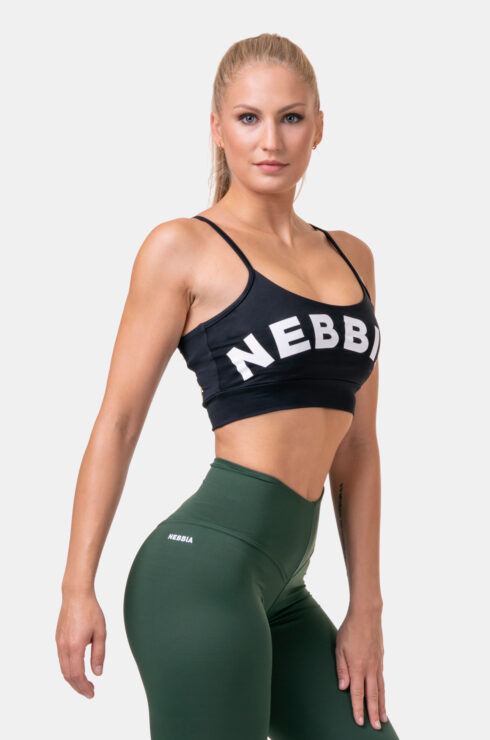
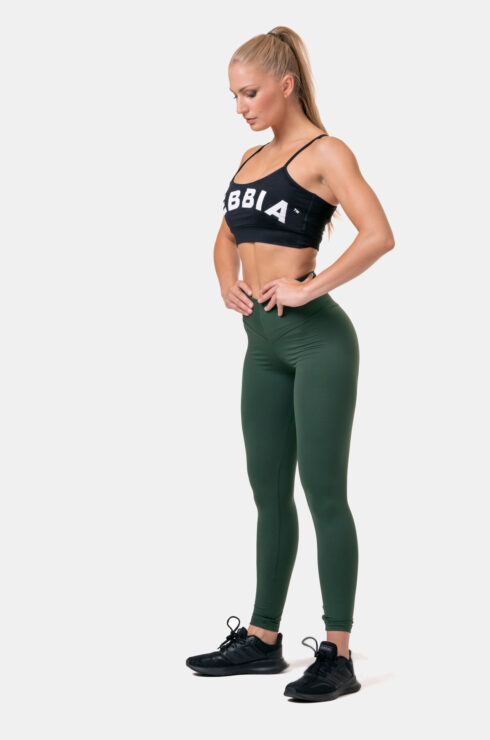
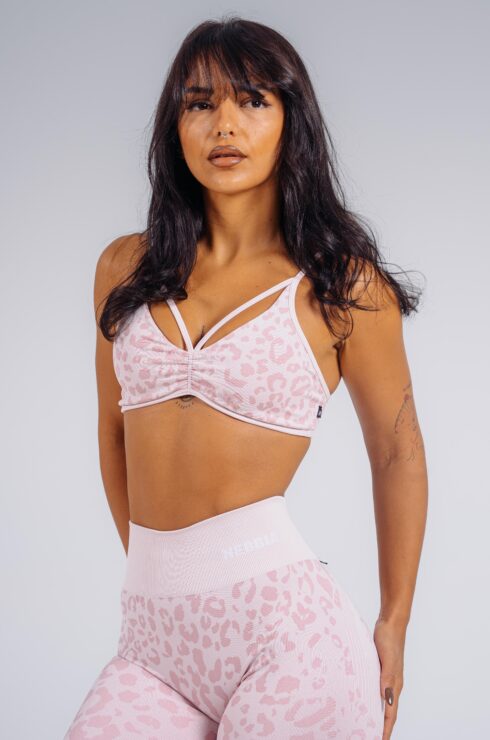
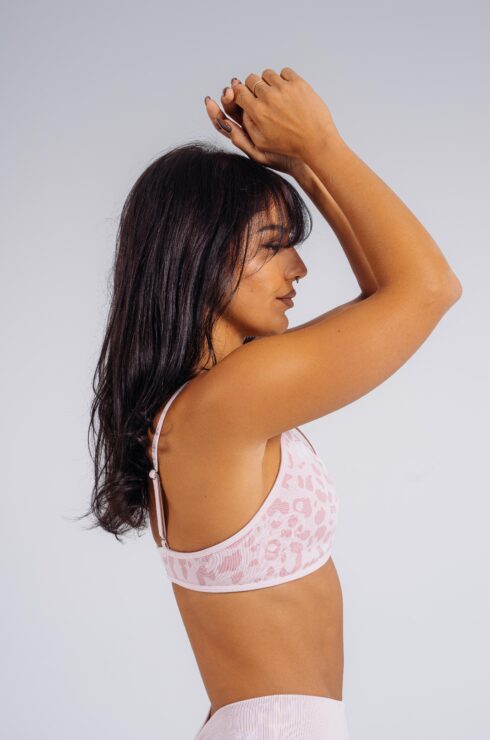
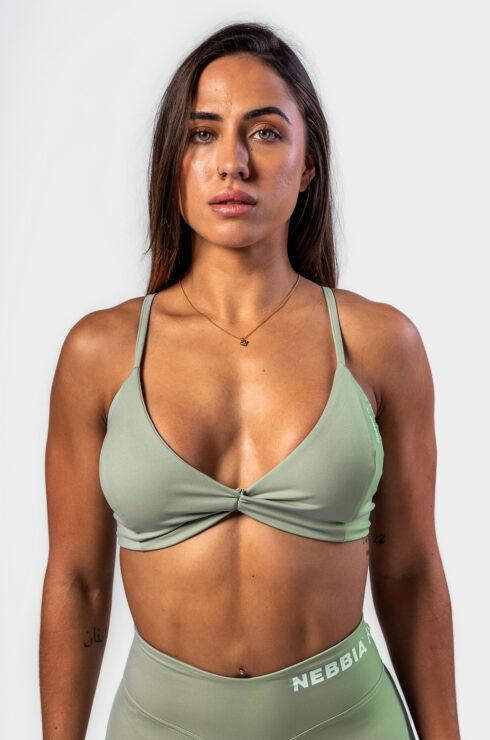
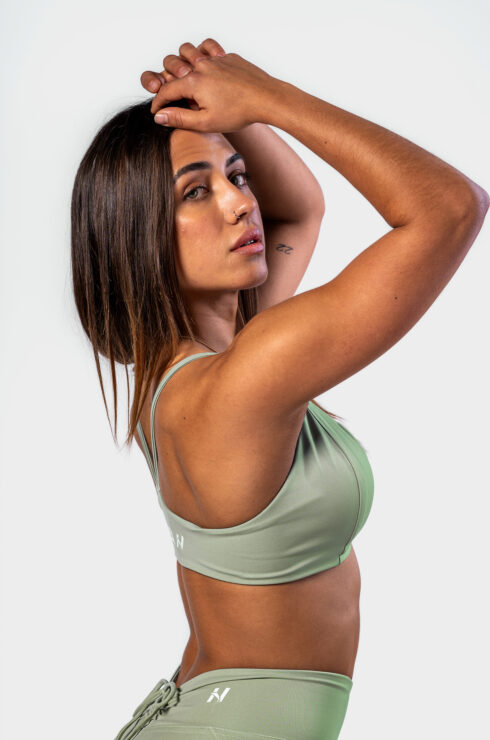
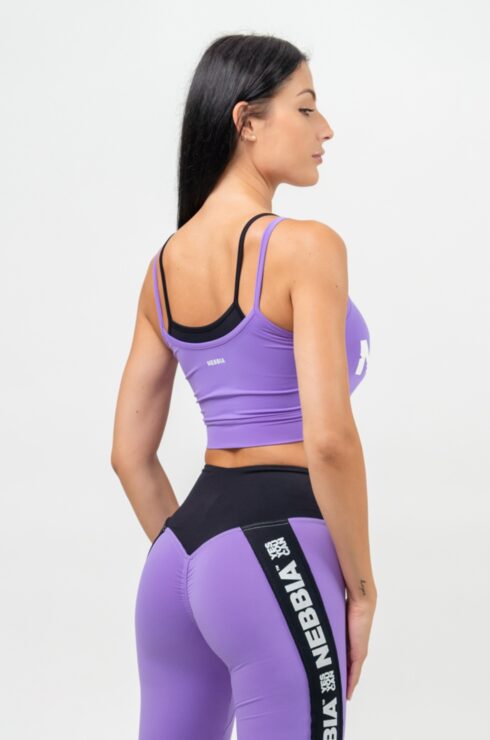
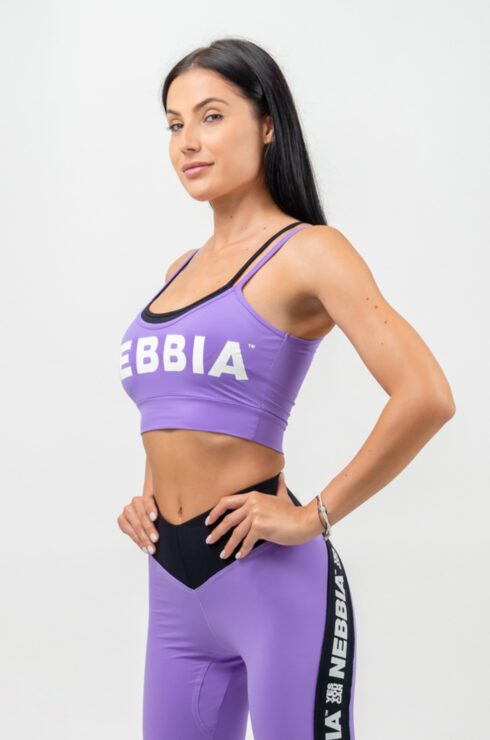
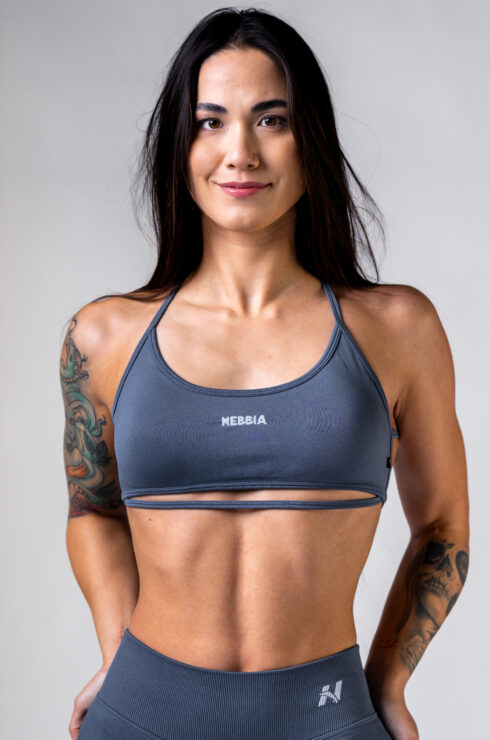
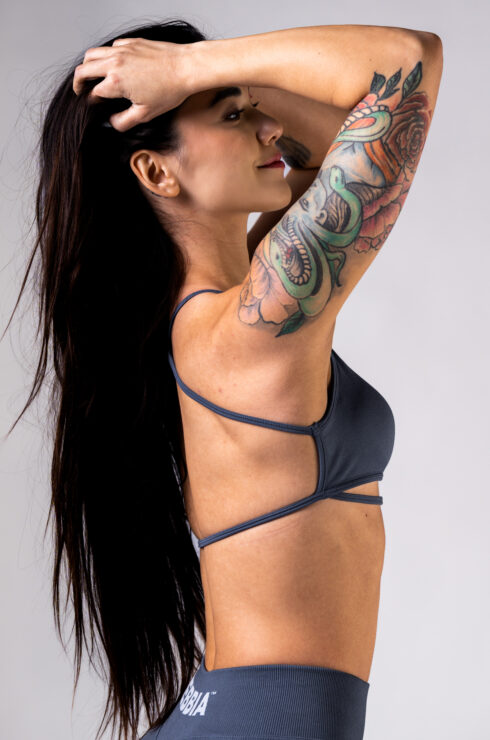
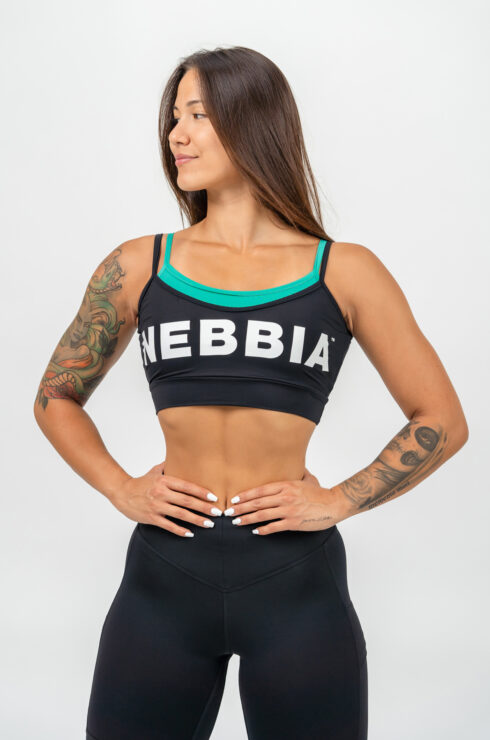
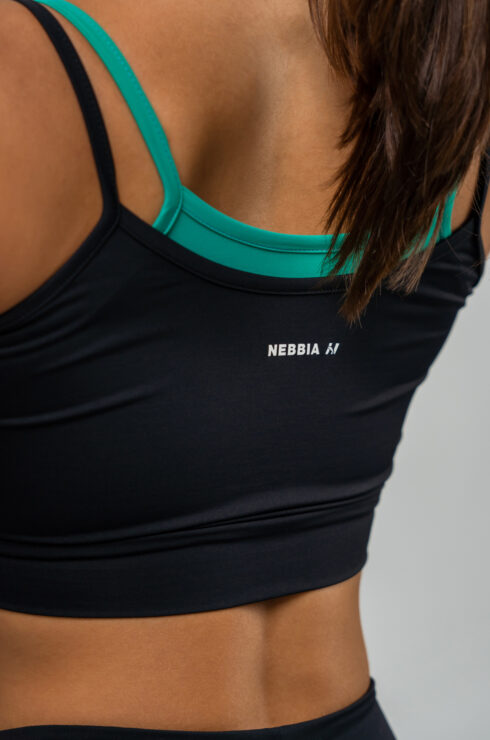
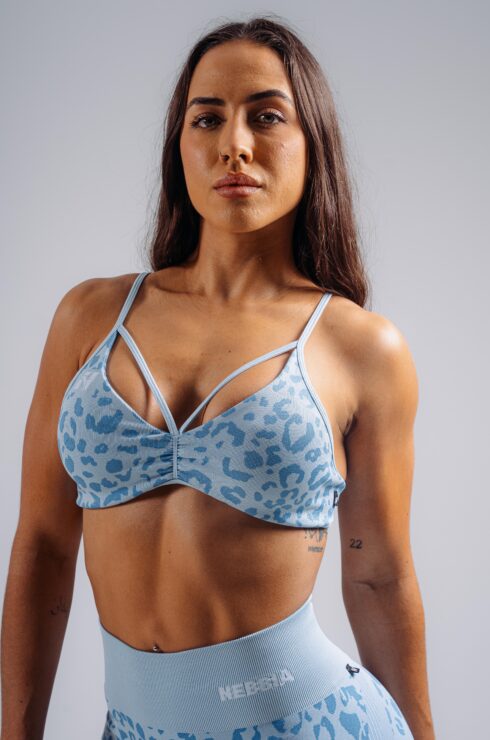
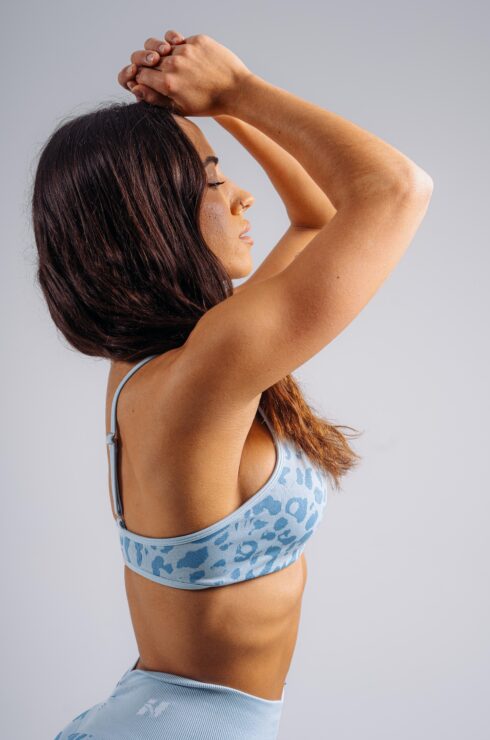
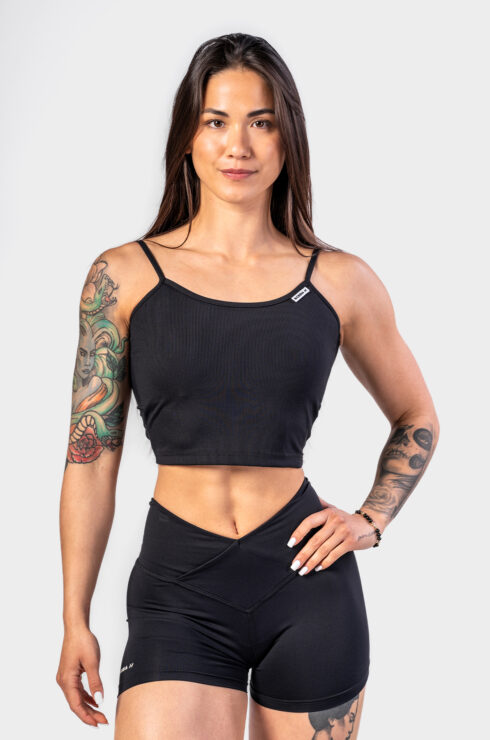
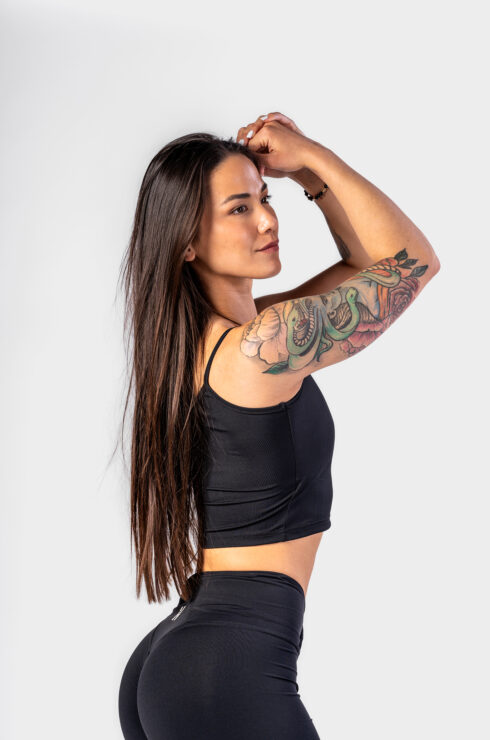
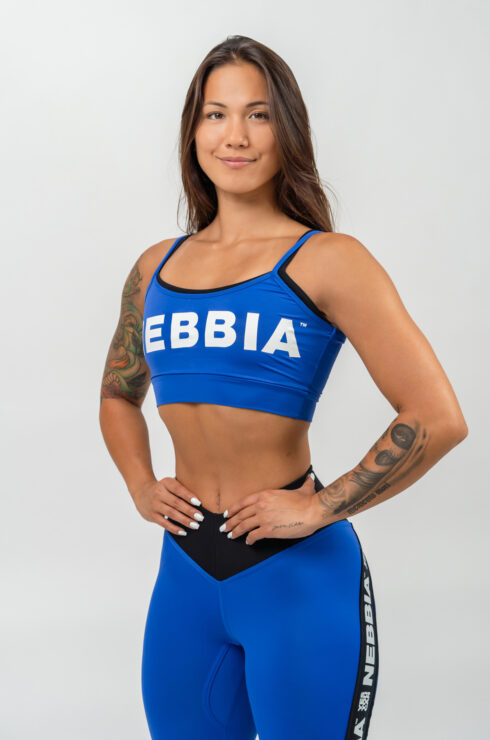
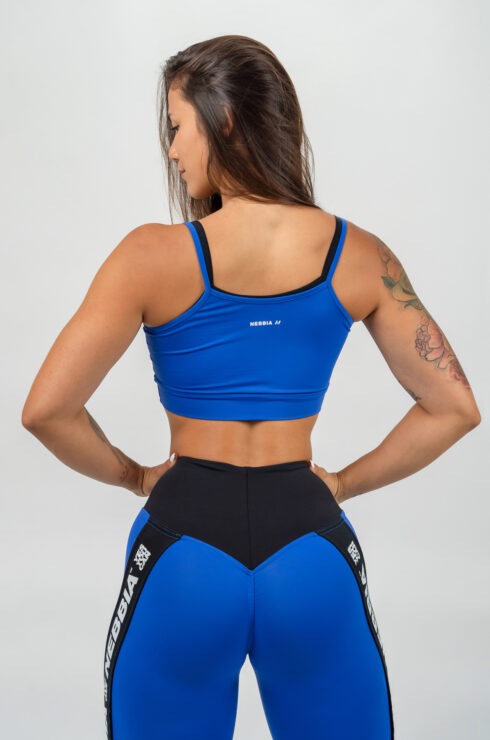
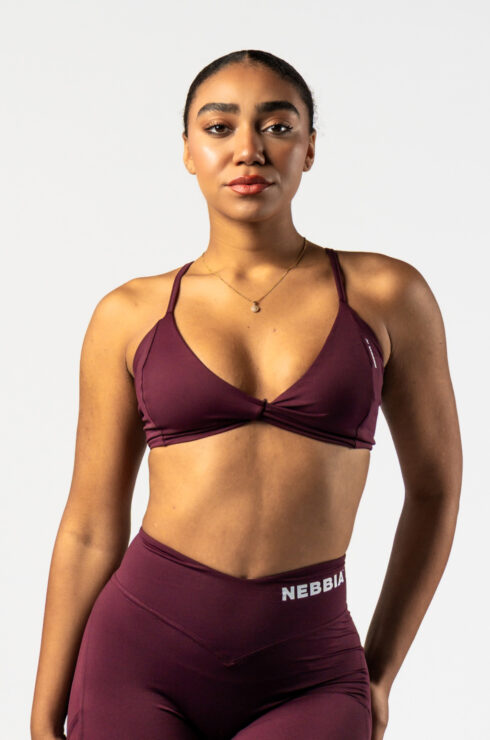
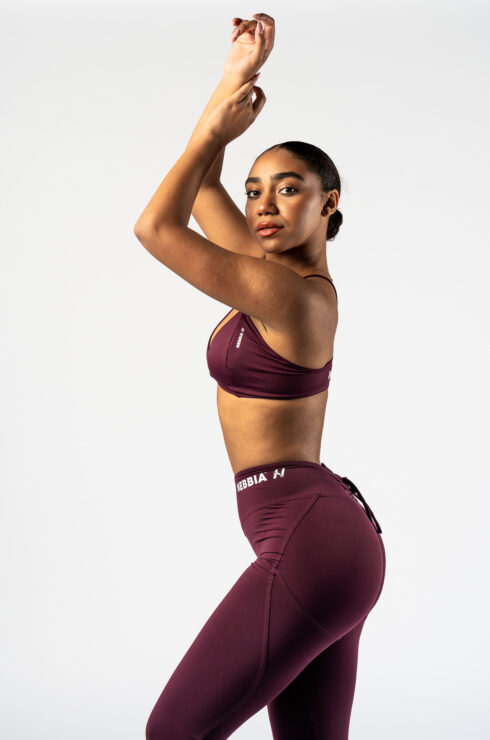
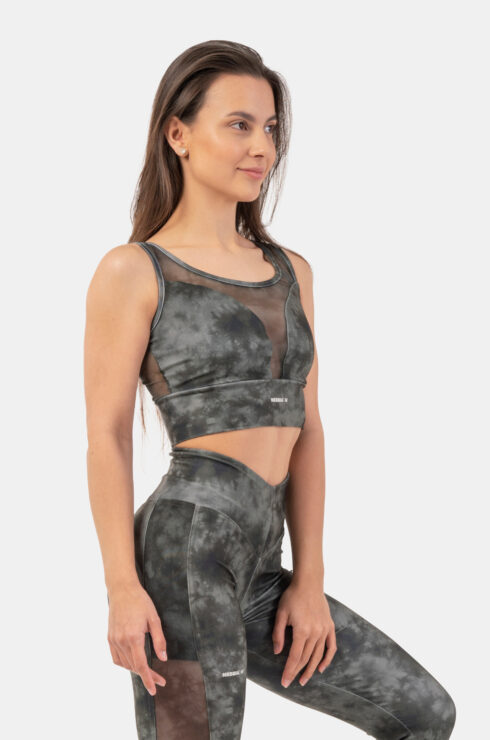
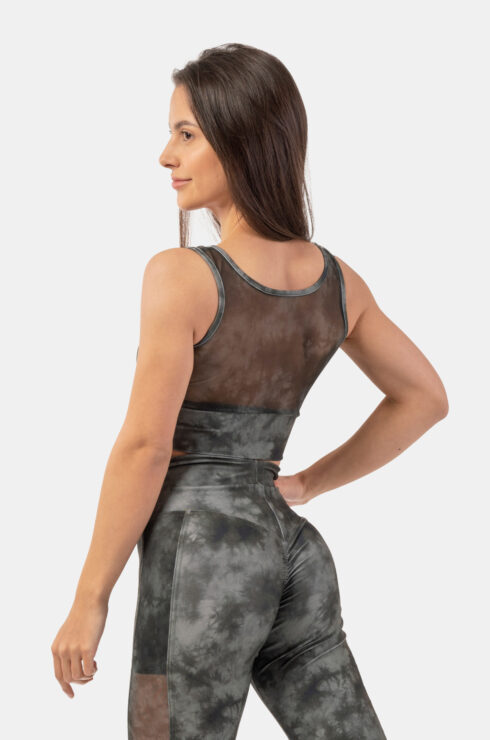
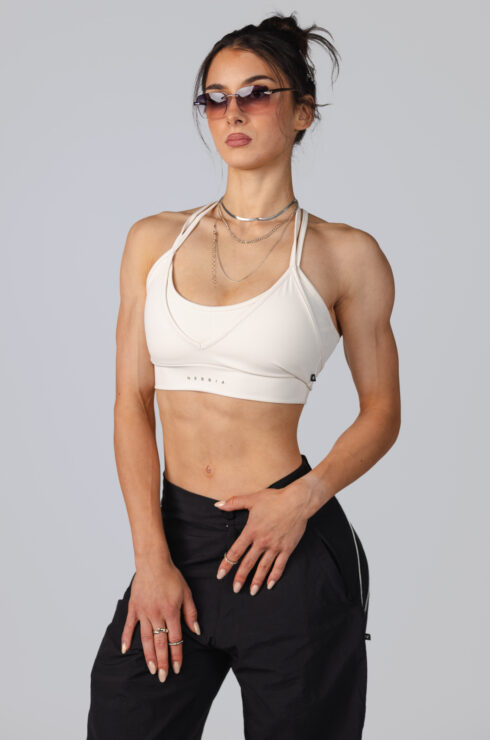
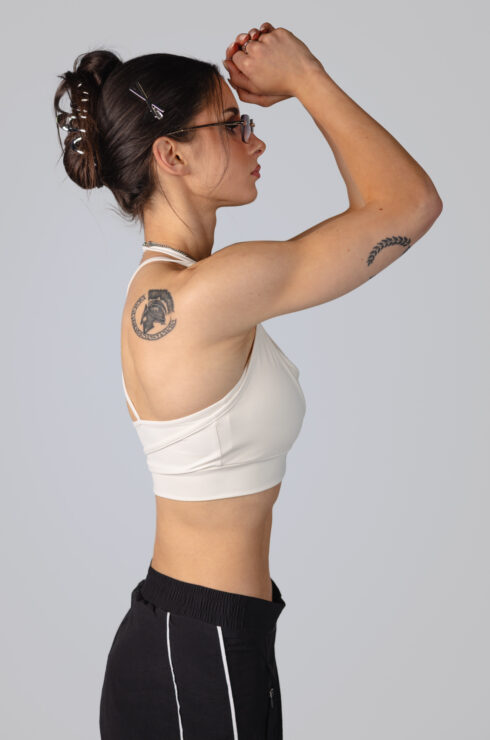
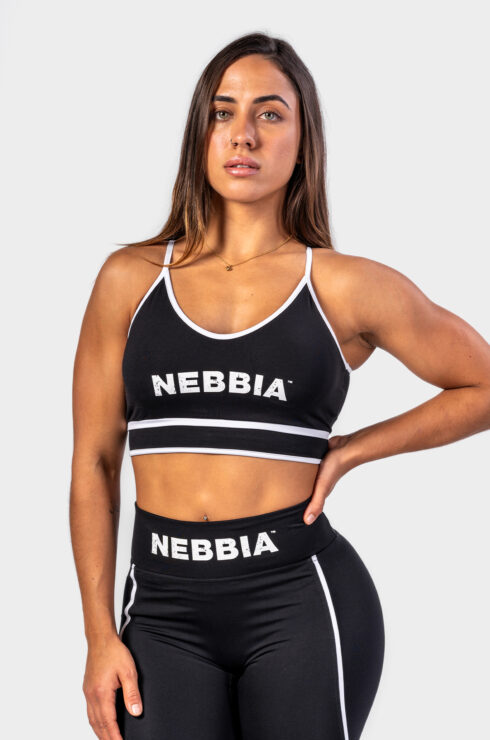
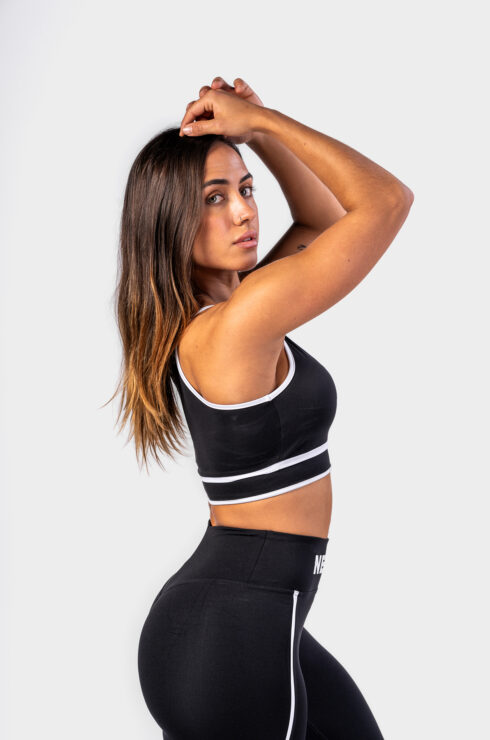
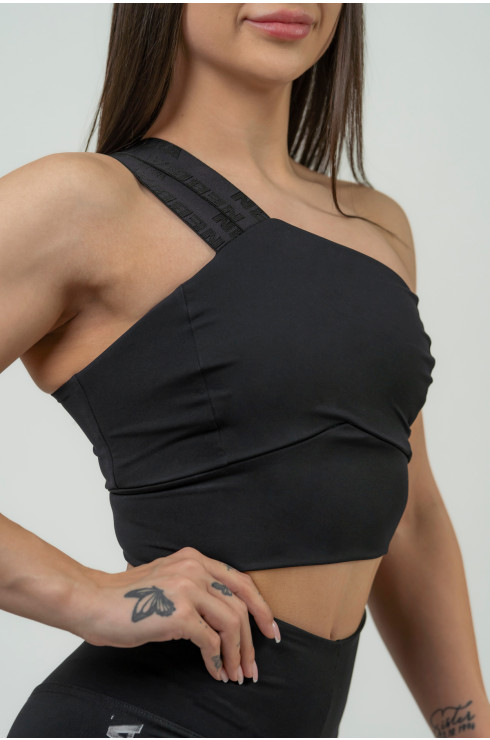
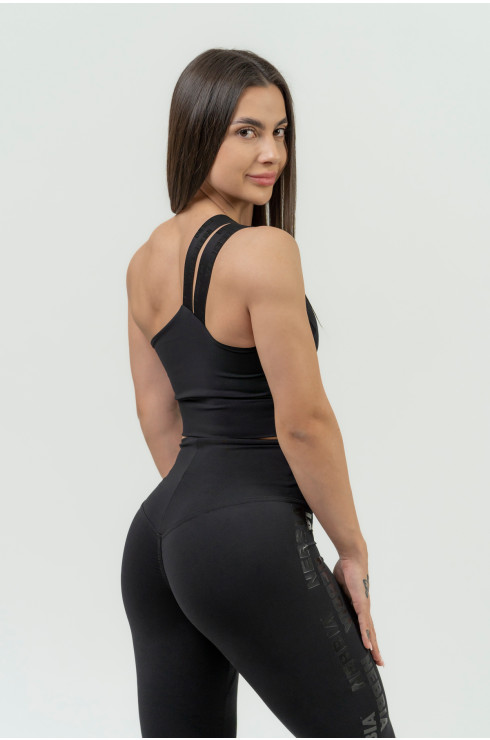
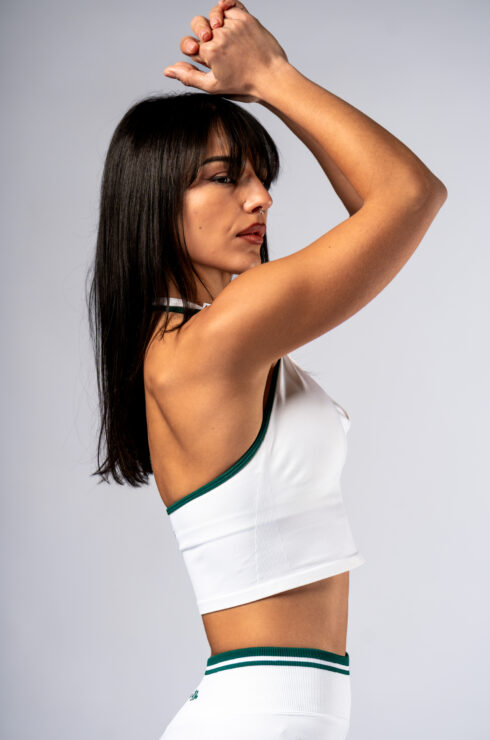
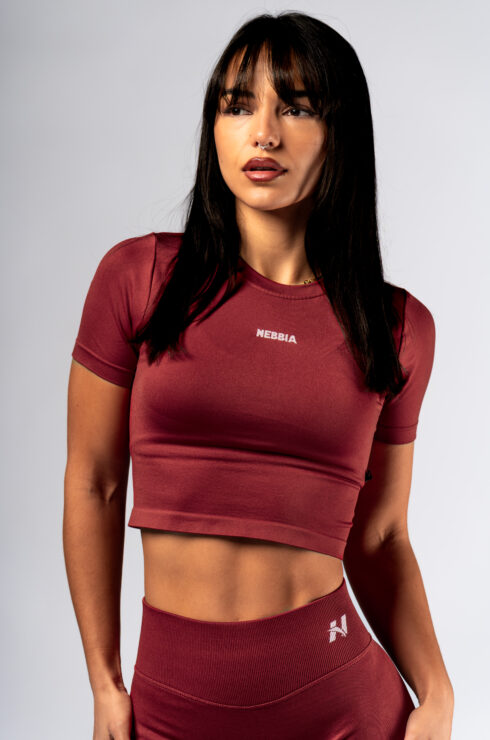
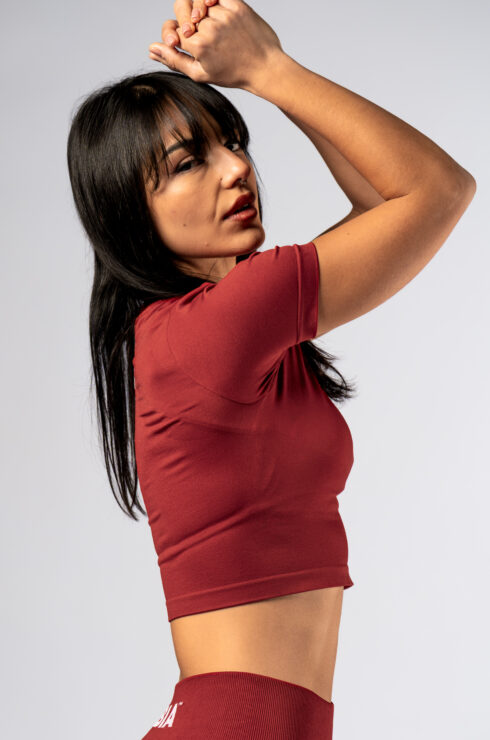
Sports bras from NEBBIA
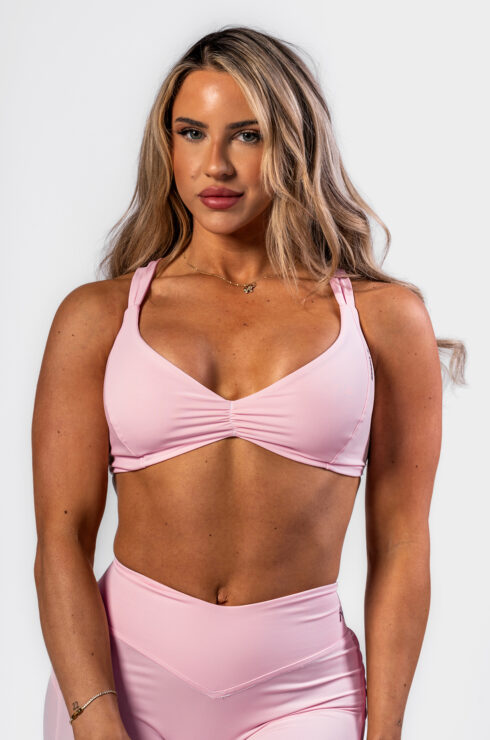
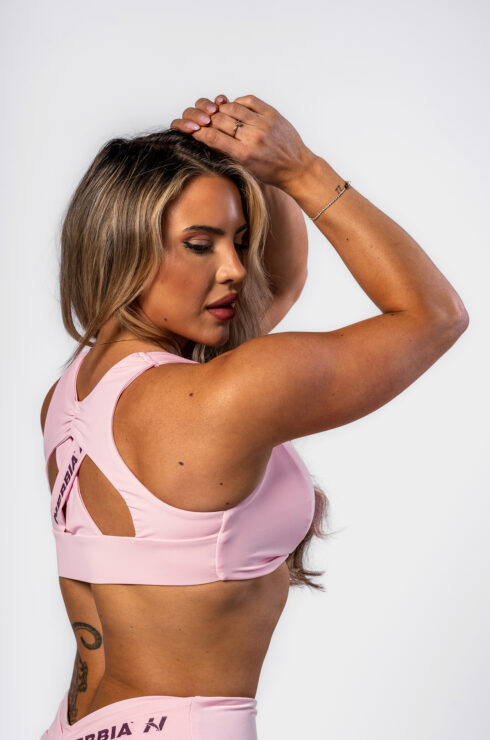
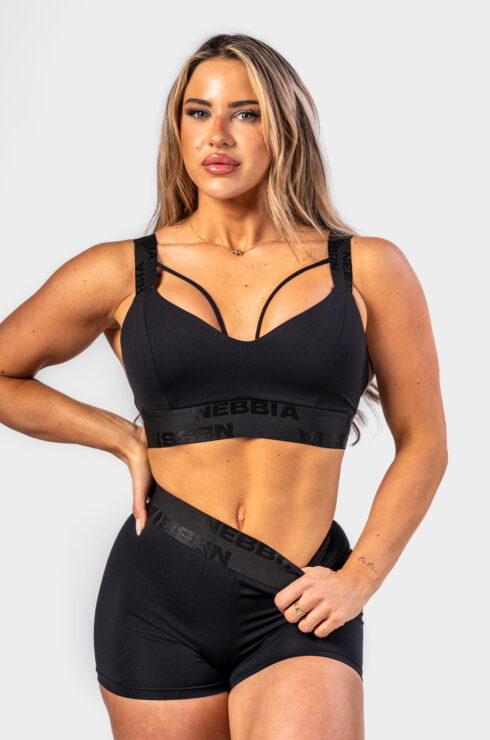
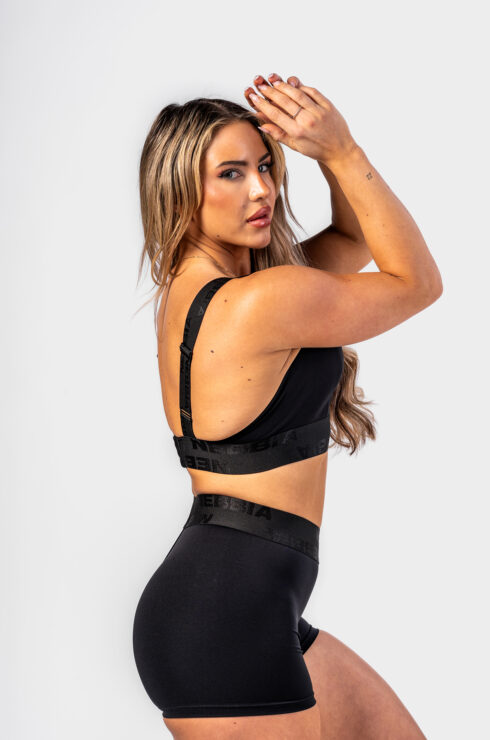
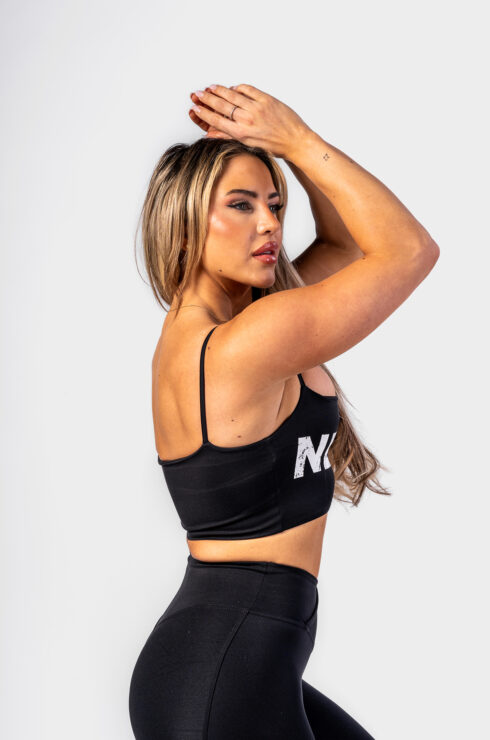
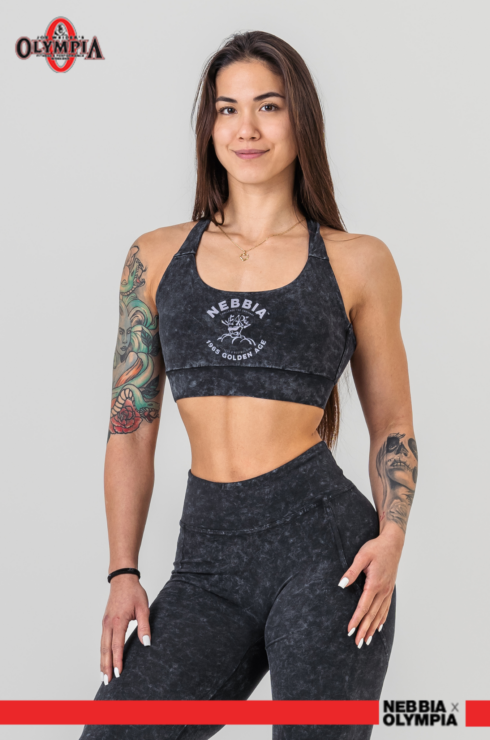
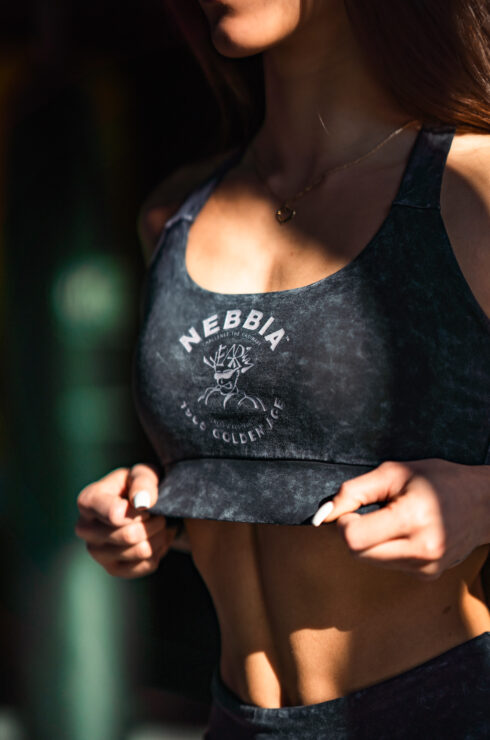
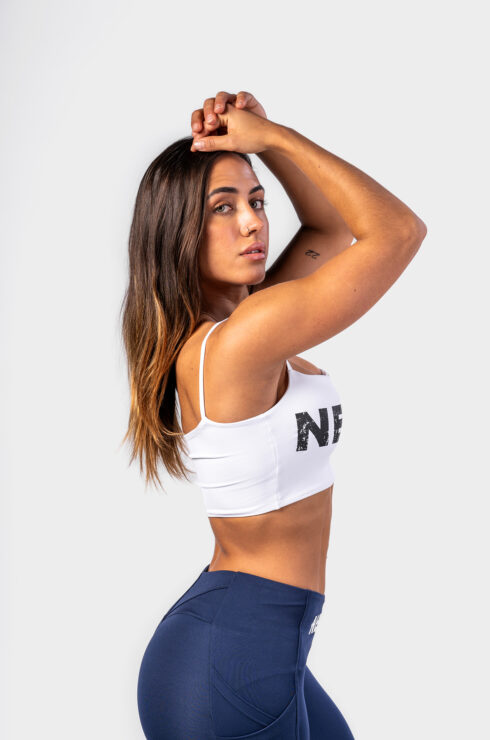
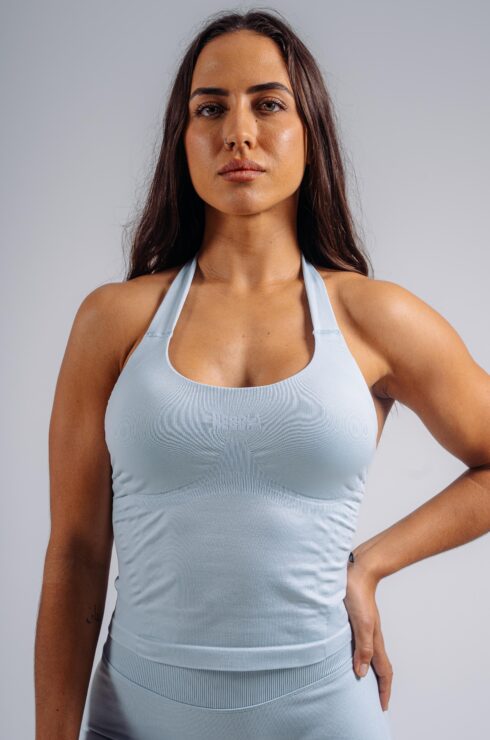
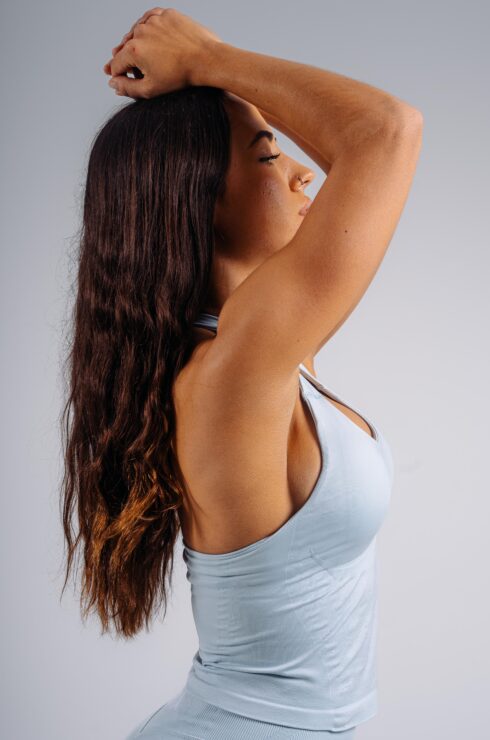
NEBBIA designs sports bras for women who train, from calm yoga sessions to demanding gym workouts. Choose the support level that matches your activity, use the fit checklist in this guide to get the size right, and combine your bra with matching leggings and tops for a complete training outfit.



How to measure your bra size: a simple bra size calculator
You can work out a starting size at home in about five minutes. Treat the result as your starting point, since the final test is always how the bra feels and sits on your body.
Quick answer: to calculate your bra size, measure snugly around your ribcage just under your bust and round to the nearest even number for your band. Then measure around the fullest part of your bust and subtract the band size. Each inch of difference is one cup size: 1 inch is A, 2 is B, 3 is C and 4 is D.
What you need
A soft tape measure (a sewing tape works well), a mirror, and a lightly lined or unpadded bra, or none at all, so the padding does not inflate the numbers.
Step by step
- **Measure your underbust (band): **Wrap the tape snugly around your ribcage directly under the breasts. Keep it level and breathe out. The tape should be firm but not digging in.
- Round the band: Round to the nearest whole number (inches) or to the nearest 5 cm. In UK and US sizing, band sizes are even numbers such as 30, 32, 34 and 36, so round to the closest even number.
- Measure your bust: Stand straight and wrap the tape around the fullest part of the breasts, level at the back and front, without squashing the tissue.
- Subtract: Bust measurement minus band size gives the cup difference.
- Convert to a cup letter: Use the chart below: a 1 inch difference is A, 2 is B, 3 is C, 4 is D and so on.
- Try it on: Sizes vary between brands and styles, so test the bra and adjust the band and cup using the fit checklist.
The most important number is the band, because it carries most of the support. Many women find their band size is smaller than they expected, and their cup is larger. If that happens to you, it does not mean you have changed shape. It means the bra you have been wearing was fitting in the wrong place.
Worked example
| Measurement | Value |
|---|---|
| Underbust | 31 inches, rounded to a 32 band |
| Bust (fullest part) | 36 inches |
| Difference | 36 – 32 = 4 inches |
| Cup | 4 inches = D |
| Starting size | 32D |
This example shows the logic of the method. The band is rounded to an even size, and the cup comes from the difference between the two numbers, so a larger gap between bust and band means a larger cup. If your numbers do not give a clean result, choose the nearer size and test both the size above and below.
In centimetres, the same method works. Measure the band and bust, round the band to the nearest 5 cm, then subtract. Each cup step is roughly 2 to 2.5 cm of difference, and brands count slightly differently, so check the size chart of the brand you are buying from.
Common measuring mistakes
A few mistakes cause most wrong results. Measuring over a thick padded bra or a bulky top adds inches that aren’t there. Pulling the tape too tight, or letting it slope up your back, skews the band. And relying on a size you were given years ago ignores how much bodies change. Above all, don’t treat the calculated size as the final answer when the way the bra fits tells you otherwise.
Research shows why this matters: a University of Portsmouth study found that the traditional tape-measure method led to the wrong size in about three of four women, usually by overestimating the band and underestimating the cup. That is why the fit test below is just as important as the numbers.
When to measure again
Remeasure after pregnancy or breastfeeding, after weight loss or gain, after starting or stopping hormonal contraception, and at least once a year. Breast size can also change slightly through the month.
Bra size chart: bra sizes, cup sizes and sister sizes explained
A bra size has two parts. The number is the band, which is your ribcage measurement. The letter is the cup, which describes the difference between your bust and your band. A 34C therefore has a 34 band and a C cup. Cup letters are relative: a 38C cup holds more volume than a 32C, because the cup grows as the band grows.
Cup size chart
The difference between your bust and band measurement, in inches, gives your cup. Cup labels differ by region after D, so check the size chart for each brand.
| Difference (inches) | Difference (cm, approx.) | US | UK | EU |
|---|---|---|---|---|
| 1 | 2.5 | A | A | A |
| 2 | 5 | B | B | B |
| 3 | 7.5 | C | C | C |
| 4 | 10 | D | D | D |
| 5 | 12.5 | DD or E | DD | E |
| 6 | 15 | DDD or F | E | F |
| 7 | 17.5 | G | F | G |
| 8 | 20 | H | FF | H |
So a “double D bra size” (DD) is a cup with a 5 inch difference, and it is called E in some European sizes. Very small cups such as AA exist for a smaller difference of about half an inch.
Band size conversion chart
| US / UK | EU | French / Spanish | Australia |
|---|---|---|---|
| 28 | 60 | 75 | 6 |
| 30 | 65 | 80 | 8 |
| 32 | 70 | 85 | 10 |
| 34 | 75 | 90 | 12 |
| 36 | 80 | 95 | 14 |
| 38 | 85 | 100 | 16 |
| 40 | 90 | 105 | 18 |
| 42 | 95 | 110 | 20 |
| 44 | 100 | 115 | 22 |
Band sizes follow the same logic everywhere, but the numbers on the label change by region. European labels use centimetres, while UK and US labels use inches, so a 75 in Europe is a 34 in the UK and US. If you shop across borders, convert the band first and then check the brand’s own chart for the cup.
Sister sizes: same cup volume, different band
Sister sizes are the neighbouring sizes that hold the same breast volume. If the band feels too tight or too loose but the cup fits, move to a sister size. The rule is simple: go down a band and up a cup, or go up a band and down a cup.
| Your size | Smaller band sister | Larger band sister |
|---|---|---|
| 32B | 30C | 34A |
| 34B | 32C | 36A |
| 34C | 32D | 36B |
| 36C | 34D | 38B |
| 34D | 32DD | 36C |
| 36D | 34DD | 38C |
Sister sizes are one of the most useful tricks in bra shopping, and one of the least known. They explain why you can try a 32D and find it holds the same volume as your usual 34C, only with a tighter band. They also help when a favourite style is sold out in your size, since a sister size can often fill the gap.
For example, if a 34C feels loose in the band, try a 32D. If it feels tight, try a 36B.
Common questions about size ranges
**Smallest and biggest bra size – **There’s no official limit. Mainstream ranges often run from around a 28 or 30 band and an A cup up to a 44 or 46 band and a G or H cup, and specialist ranges go well beyond that.
**Popular sizes – **Sizes like 32B, 34B, 34C, 36C and 34D are widely stocked, but a large share of women need sizes outside the middle of the range, which is one reason fit problems are so common.
Brand and style differences – The same size can fit differently between brands and between styles such as push-up, balconette and sports bras, so treat your calculated size as a starting point and adjust from there.
Band extenders – A bra extender adds a few centimetres to the band. It’s a handy short-term fix for a bra that’s slightly tight, for example during pregnancy, but it’s no substitute for the right size.






How to know a bra fits: the 7-point fit check
A bra that fits is comfortable enough to forget about. Put it on, fasten it on the loosest hook, lean forward and settle your breasts into the cups, then check these seven points.
- The band is snug and level: It sits horizontally around your back, in line with or slightly lower than the front, and does not ride up. You should be able to fit two fingers under it.
- Most of the support comes from the band: If the straps are doing all the work, the band is too loose.
- The cups hold you without spilling or gaping: No bulge over the top or sides, no wrinkles or empty space in the cup.
- The underwire sits flat on your ribcage: It surrounds the breast tissue and does not rest on it or dig into the sides.
- The gore sits flat: In an underwired bra, the centre panel touches your breastbone.
- The straps stay in place: They are firm but not cutting, and do not slip off the shoulders.
- You can move comfortably: Raise your arms, bend, twist and breathe deeply without the bra shifting.
If your bra passes all seven points, it fits, even if the size on the label surprises you. Do not hold on to a number from the past. Women often wear the size they were fitted in years ago, long after their body has changed, and a bra that fits well matters far more than a size you have always worn.
Fit problems and their fixes
| What you notice | Likely cause | What to try |
|---|---|---|
| Band rides up your back | Band too big, or straps too tight | Go down a band size and up a cup |
| Breast spills over the top or sides of the cup | Cup too small | Go up a cup size |
| Gaping at the top of the cup | Cup too big, or the wrong shape for your breasts | Go down a cup size or try a different style such as abalconette |
| Wire sits on breast tissue or digs in at the side | Cup too small, or wire shape not suited to your breast shape | Try a larger cup or a wider-set style |
| Gore floats away from your chest | Cup too small or the style is too narrow | Go up a cup or try a wider gore |
| Straps dig into your shoulders | Band too loose so the straps carry the weight | Fasten a tighter band and loosen the straps |
| Straps slip off the shoulders | Straps set too wide, or cups too small | Try a racerback or a convertible style, and check the cup size |
| Red marks or discomfort at the end of the day | Band or wire too tight, or the wrong size | Try a sister size or a wireless style |
| A bulge of flesh at the back or underarm | Band too tight, or the wings are too narrow | Go up a band size or choose a bra with wider wings or a smoothingback |
Most fit problems come down to the same two issues: a band that is too loose and a cup that is too small. Fixing those two usually solves slipping straps, digging wires and spillage together. If a change in size does not help, the problem is probably the shape of the bra rather than its size, so try a different style with the same measurements.
Tips for a better fit
Try on at least two sizes and several styles, because the same size can fit differently across styles. Fasten a new bra on the loosest hook so you can tighten it as the elastic stretches, and scoop your breast tissue forward from the side into the cup before you judge the fit. If you’re unsure, a professional bra fitting takes a few minutes, is free in many stores and often changes a woman’s size by a cup or a band.
Breast shapes and the bra styles that suit them
Two women with the same bra size can need different bras because breast shape differs. Shape describes where the volume sits, how wide the breasts are set and how firm the tissue is. Most people fit more than one description, and shape can change with age, pregnancy, weight and hormones. Use this table as a guide, not a rule.
| Shape | What it looks like | Styles that tend to work |
|---|---|---|
| Round | Full evenly on top and bottom | Most styles work: balconette, full cup, T-shirt, plunge |
| Teardrop (bell) | Fuller at the bottom, softer on top | Balconette, push-up, moulded cup with a firm base |
| Side set | Breasts set wide with space between | Plunge and push-up styles that bring breasts together, and a widergore |
| East-west | Nipples point outward | Plunge, balconette, side-support styles |
| Close set | Little space between the breasts | Plunge with a low gore, and balconette |
| Slender (narrow) | Narrower and longer in shape | Padded, push-up and plunge styles, which add fullness at thefront |
| Asymmetrical | One breast is a different size or shape | Cups with removable pads, and a fit based on the larger breast |
| Tubular | Narrow base with a long, fuller front | Moulded cups with soft, stretchy lining and a deeper cup |
Shape explains why you can fit one brand perfectly and struggle with another in the same size. A balconette with a wide-set cup suits breasts that are fuller on the top, while a plunge suits breasts set close together. If a bra in your size gapes on top or cuts in at the side, the shape of the cup is the likely cause, not the size.
Asymmetry is normal
Most women have one breast slightly larger than the other. Choose the bra that fits your larger breast and use a removable pad or a shaped insert in the smaller cup if you want a more even look. You can also try styles with stretch lace or foam-lined cups, which are more forgiving.
Breast shape and sports bras
For exercise, shape matters less than support. Choose a style that holds your breasts in place, using separate cups for larger busts and compression for smaller ones, and check that the underband stays flat and level.
Bra materials and fabrics: what they feel like and when to choose them
The fabric changes how a bra feels, how long it lasts and how it behaves in heat and sweat. Most bras are blends, so check the label for the main fibre and for elastane, which provides stretch and recovery.
| Material | Benefits | Drawbacks | Best for |
|---|---|---|---|
| Cotton and organic cotton | Soft, breathable, gentle on sensitive skin | Absorbs moisture, holds less shape, dries slowly | Daily wear, warm weather, sensitive skin |
| Microfibre (polyamide and elastane) | Smooth, light, quick to dry, invisible under clothes | Less breathable than natural fibres | T-shirt bras, seamless and everyday bras |
| Nylon and polyester blends | Durable, strong, moisture-wicking | Can feel less natural against skin | Sports bras and activewear |
| Elastane (spandex) | Stretch and recovery, a close fit | Loses elasticity with heat and age | Blended into most bras for comfort |
| Lace | Delicate, decorative and often stretchy | Less durable, may feel scratchy if rigid | Occasion and everyday fashion bras |
| Mesh | Light, ventilated, sheer | Little modesty without a lining | Sports panels, see-through styles, hot climates |
| Merino wool | Temperature-regulating, odour-resistant, soft | Costs more and needs careful washing | Outdoor activity and cooler weather |
| Silk | Luxurious, smooth, lightweight | Delicate and not for heavy support | Special occasions |
| Foam and moulded cups | Shape, smoothness and modesty | Heat retention, and the foam can lose shape over time | T-shirt and push-up bras |
| Silicone | Grip and adhesion, used for strapless bands and stick-on bras | Not breathable and needs care | Strapless, backless and stick-on bras |
Most bras combine several of these materials, with a soft or smooth fabric next to the skin and a stronger one in the band. For example, a T-shirt bra may use a microfibre outer with foam inside, and a sports bra may combine nylon and elastane with a mesh panel at the back. Reading the care label also tells you how to wash it, which affects how long the bra will last.
How to choose the right fabric
For sensitive skin, cotton or organic cotton is the safest bet, and it’s worth keeping stiff lace away from the skin. For exercise, go for moisture-wicking nylon or polyester blends with flat seams. In summer, breathable cotton or mesh panels keep you cooler, and under thin tops a seamless microfibre bra in a shade close to your skin tone disappears best. If you want a bra to last, look for a strong band and quality elastic, since the band is the first part to wear out.
Features and benefits: what to look for
Most bra problems can be solved by choosing the right combination of features. Use this table to match a feature to a need.
| Feature | Benefit | Good to know |
|---|---|---|
| Underwire | Lifts, separates and shapes; strong support for fuller busts | Must fit properly or it digs in; wireless is better if you dislikewires |
| Wire-free (wireless) | Comfort, flexibility, suitable for sleep and lounging | A well-made wireless bra still supports, but may lift less |
| Moulded or padded cups | A smooth, consistent shape under clothes | Warmer than unlined styles |
| Removable pads | Adjust the shape or even out different sizes | Check that the pockets keep the pads in place |
| Wide straps | Spread the load and reduce shoulder pressure | Can show under narrow-strap tops |
| Adjustable straps | Fine-tune the fit and fit torsos of different lengths | Fabric straps can stretch over time |
| Racerback or crossover back | Keeps straps in place | Not for every neckline |
| Back smoothing panel | Reduces bulges at the back | Choose a wider band for a soft transition |
| Wide wings and a deeper band | Extra support for larger cup sizes | Slightly more visible under thin clothes |
| Front closure | Easy to fasten and take off | A clasp can be felt on the breastbone |
| Multiple hook-and-eye columns | Gives a more secure fit and easier adjustment | Start on the loosest hook |
| Silicone grip | Keeps strapless bras and bands in place | Needs a clean, dry skin surface |
| Convertible straps | One bra for different necklines | Straps can be less supportive than fixed ones |
| Moisture-wicking fabric | Keeps skin dry during exercise | Often combined with mesh for ventilation |
| Bra extender | Adds length to a band that is slightly too tight | A temporary fix rather than a permanent answer |
| Bra inserts and pads | Add modesty or shape | Wash or replace as advised |
Features are easiest to judge in pairs. An underwire gives more lift but can feel firm, so a wide band and soft fabric help balance it. A strapless bra relies on the band and grip, so a strong closure matters. Start with the one or two features that solve your biggest problem, and ignore the rest.
What a good bra gives you
A bra that fits gives you comfort across a full day, without red marks or constant tugging and adjusting. In sport it means less breast movement and less exercise-related breast pain. It also gives you a smoother silhouette, so clothes hang better, and a bit of confidence, because a good fit lets you stop thinking about what you’re wearing. And since the band carries most of the support, your shoulders take less strain.
A bra is not a medical device. It will not cure back pain or prevent ageing, but a well-fitting one can make everyday life and exercise noticeably more comfortable.
Which bra is best for you? Choose by need
There is no single best bra, only the best bra for a particular body, outfit and activity. Start from what you need it to do.
| If you need… | Look for | Avoid |
|---|---|---|
| The most comfortable bra | Soft wireless, seamless or cotton styles with wide straps and astretchy band | Rigid lace and thin straps |
| Support for large breasts | Full cup, a wide band with at least three hook columns, wide paddedstraps, firm side panels, underwire or structured cups | Unlined bralettes and strapless styles for daily wear |
| A bra for a small chest | Light padding, push-up, balconette or plunge styles, bralettes witha smooth shape | An oversized cup and stiff padding that gapes |
| Lift and shape for sagging or softer breasts | Underwire or structured cups with a firm band and side support,balconette and full-cup shapes | A loose band and unstructured fabric with no shaping |
| Support for older women | Easy fastenings such as front closure, soft wireless support andwide straps | Stiff fabrics and tight bands |
| Less visible back fat | A wider, smoothing back, a soft band with several hook columns, anda correctly sized band | A tight narrow band |
| A bra for a backless dress | Low back convertible, adhesive or stick-on styles | A standard band that shows |
| A bra for a strapless dress | A firm strapless with a silicone grip and boning | A loose band, or a size chosen only because it is smaller |
| A bra for a white or sheer top | A seamless T-shirt bra in a shade matching your skin tone | White and bright colours, which show through most clearly |
| Light back and posture comfort | A well-fitting band, wide straps and a supportive back panel | A posture bra used instead of exercise or ergonomics |
| Pregnancy and breastfeeding | A maternity or nursing bra with soft, stretchy fabric and adjustableclosures | Underwires that press on tissue as it changes |
| Recovery after breast surgery | A post-surgery or compression bra recommended by your surgeon | Anything not approved by your care team |
| A first bra for a teen | A soft training bra with a comfortable band | Padding and a complicated fit |
| Swimming | A swim bra or a bikini top with built-in support | Cotton and any bra not designed for water |
| Sleeping or lounging | A soft wireless or bralette-style bra, or none at all if youprefer | Tight bands |
Use this table as a shortcut, not a rule. Two women with the same need can end up with different answers because of cup size, breast shape and personal preference. If you are choosing for a particular occasion, try the bra with the outfit before you commit.
Common questions about sagging
Breast shape changes with age, genetics, pregnancy, weight changes and hormones. There is no firm proof that wearing a bra or going without one changes how much breasts sag over a lifetime. What a supportive bra does offer is comfort, particularly during exercise, when support reduces movement and discomfort.
Choosing colour
Skin-tone and nude shades disappear under white and light tops, while black suits dark and lightweight fabrics. A red or bright bra is eye-catching but shows through white. For everyday wear, keep at least one bra in black and one in a nude shade that matches your skin tone.
Fun facts about bras
- The bra has a surprisingly human story, and a few facts are useful when you shop too. Here are some of the best, from history, science and everyday wear.
- The very first modern bra was made from two handkerchiefs and a ribbon, improvised in 1913 so a nineteen-year-old could wear a sheer evening gown without a corset showing. Its inventor sold the patent for $1,500, and the company that bought it went on to make millions.
- The word has a story too. “Brassiere” comes from French, where it was linked to the upper arm, and it was shortened to “bra” in the 1930s.
- Sports bras came much later. The first one, in 1977, was two jockstraps sewn together. Researchers have since found that breasts move in a figure of eight when you run, not just up and down, which is a big reason modern sports bras are engineered the way they are.
- No breast is perfectly symmetrical, so a small difference between left and right is completely normal, and your size can shift through the month with hormones, as well as with age, pregnancy and weight. Bra sizing isn’t standardised either: a 34C in one brand can feel like a 32D or a 36B in another, which is why sister sizes exist.
- Finally, stretch fibres such as elastane arrived in the late 1950s and made bras lighter, softer and far more comfortable than rigid fabrics. And in case you’ve ever wondered, medical experts have found no evidence that wearing a bra causes breast cancer.
How to care for your bras
Good care keeps the elastic working and the shape intact. The golden rule is simple: be gentle and keep bras away from the dryer.
| Step | What to do | Why |
|---|---|---|
| Wash | Hand wash in lukewarm water with mild detergent, or use a delicatecycle at 30 degrees in a garment bag | Prevents stretching and protects cups and wires |
| Fasten | Hook the bra before washing | Stops the hooks catching other fabrics |
| Avoid | No bleach and no fabric softener | Both break down elastic |
| Dry | Reshape and air dry flat or hung by the centre gore; never use atumble dryer | Heat damages elastane and moulded cups |
| Rotate | Own several bras and alternate them, so each rests for a day ortwo | Gives the elastic time to recover |
| Frequency | Wash after a few wears, and sports bras after every workout | Sweat and skin oils break down fabric |
| Store | Lay moulded cups flat or nested, not folded in half | Keeps their shape |
| Replace | Many fitters suggest every 3 to 6 months for bras you wearoften | Elastic loses recovery with use |
The most important habit is rotation. Elastic needs time to recover after wear, so a bra worn every day will wear out much faster than the same bra shared with two or three others. Washing gently and drying flat is the next best thing you can do, and costs nothing.
Signs it is time for a new bra
You’ll know it’s time for a new bra when you’re fastening the band on the tightest hook and it still feels loose, when it rides up your back, or when the cups look creased, flat or discoloured. Bent or poking wires, stretched or fraying straps and pilled fabric are other giveaways.
Travel and storage tips
Pack bras in a hard case or stack the cups together, so they do not get crushed in a suitcase. Wash sports bras after each use and let them dry fully before putting them away.
Bra FAQs: your questions answered
What is the most common bra size?
Sizes in the middle of the range, such as 34B, 34C and 36C, are the most widely stocked and searched for. Many women actually need a smaller band and a bigger cup than the size they have always worn, so do not rely on the most common size.
How do I know my bra size?
Measure your underbust and the fullest part of your bust, round the band to an even number, and subtract to get the cup (see our step-by-step guide). Then confirm the size by trying the bra on and using the fit checklist.
How should a bra fit?
The band should be snug and level, the cups should hold your breasts without spilling or gaping, the underwire should sit flat on your ribcage, the gore should lie flat and the straps should hold without digging in.
What is a sister size?
A sister size has the same cup volume as your usual size but a different band. Go down a band and up a cup, or up a band and down a cup. For example, 34C, 32D and 36B are sister sizes.
What does the letter in a bra size mean?
The letter shows the difference between your bust and your band measurement, not an absolute breast size. A D cup on a 32 band is smaller in volume than a D cup on a 38 band.
How often should I replace my bras?
Many fitters suggest replacing bras you wear often every 3 to 6 months, or as soon as the band stretches, the straps lose their elasticity or the cups lose their shape.
Do I need a different bra for sport?
Yes. A sports bra is designed to limit breast movement in three directions, and research shows it can reduce movement considerably compared with a regular bra. Match the support level to the activity: low for yoga, medium for gym classes and cycling, high for running and jumping.
Which is better, a wired or a wireless bra?
Neither is better for everyone. Underwires offer more lift and separation, especially for fuller busts. Wireless bras are more comfortable and flexible, and well-made ones can still support well. Choose by comfort and by how your breasts feel at the end of the day.
Can a bra fix my posture or back pain?
A bra with a well-fitting band and wide straps can reduce strain on your shoulders. A posture bra may provide a gentle reminder to stand tall, but it will not correct posture on its own. Strengthening exercises and good ergonomics are more effective, and persistent back pain deserves a medical check.
Can wearing a bra cause health problems?
There is no evidence that wearing a bra causes breast cancer. A bra that is too tight or poorly fitted can cause discomfort, marks and shoulder pain, so fit is the real issue. If you notice a painful lump or a change in your breasts, see a doctor.
Is it bad to sleep in a bra?
It is a personal choice and not harmful. If you prefer to wear one at night, choose a soft, wire-free bra without a tight band.
What bra should I wear under a backless or strapless outfit?
Use a low-back convertible bra, a stick-on bra or a strapless bra with a silicone grip. For strapless, make sure the band is firm and correctly sized, since a band that is too small will dig in and one that is too large will slip.
What is a training bra?
A training bra is a soft, light-support bra designed as a first bra for girls and teens whose breasts are beginning to develop. Comfort and the right size matter more than padding or shape.
Final thoughts: finding the bra that fits you
The right bra isn’t about a number on a label. It’s about a snug, level band, cups that hold you comfortably and a style that suits what you’re doing, whether that’s a long day at work, a night out or a run. Use a bra size calculator or a tape measure as your starting point, then trust how the bra feels when you try it on.
Bodies change, so it’s worth checking your size once a year and after pregnancy, weight changes or a new training routine. Keep a small rotation of bras for different needs, look after them well, and replace them when the band loses its stretch. A well-fitting bra is a small change that makes a big difference to how you feel every day.